Blog · field notes
Playbooks in public.
Embargo strategy, tier-1 placement, APAC localisation, crisis communications, and KOL wave design. Drawn from six years and 50+ launches.

Field notes
Notes from inside the launches.
Six years, 50+ launches, six APAC markets.

Stop Announcing, Start Narrating: What Crypto PR Gets Wrong
Most crypto brands treat PR as a stream of announcements. Two teardowns, Tangem and Limitless, show how a bigger narrative turns every update into news.
Read playbook →
The Conference Math Nobody Wants to Do
Crypto event ROI from TOKEN2049, KBW and India Blockchain Week: why small rooms win, ecosystem events, merch people keep and five questions before you book.
Read playbook →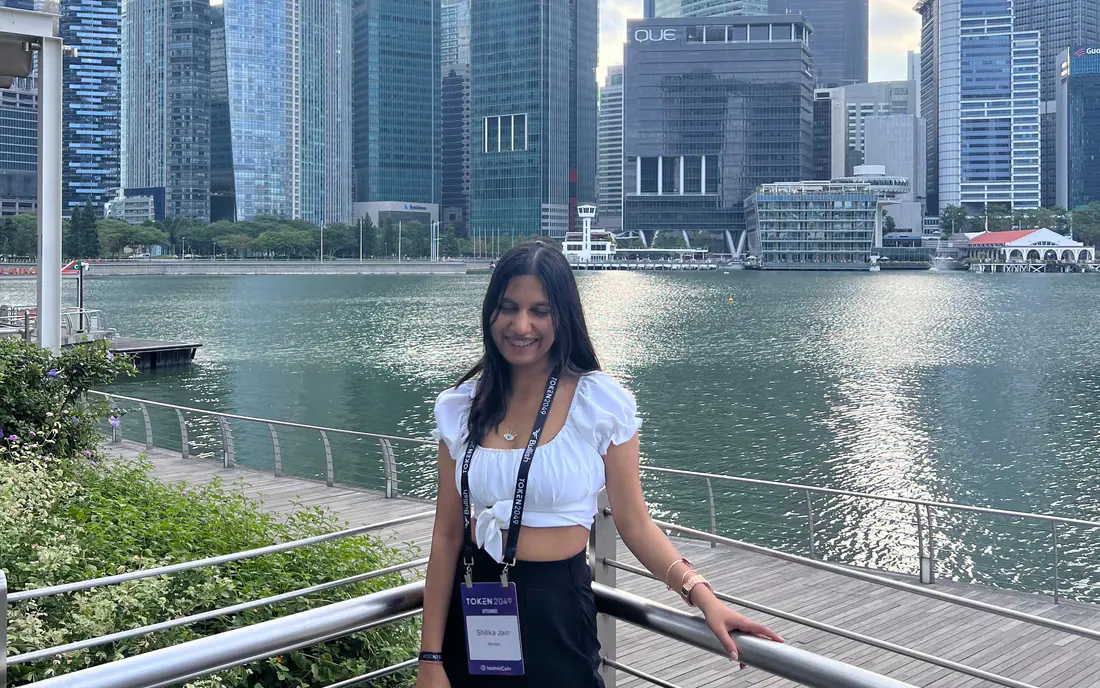
Risks of Using AI to Write Press Releases: A Review Checklist
Invented facts, fake quotes, tone drift and legal exposure: the real risks of AI-drafted press releases, plus a six-pass review before anything goes out.
Read playbook →
Too Many Announcements? Signs Your Crypto Community Tuned Out
Seven signs your crypto community has stopped reading your announcements, plus a three-tier rule for when to space, bundle or add context to each piece of news.
Read playbook →
Crypto Marketing Differences in Asia vs the US: Five Dials
How crypto messaging shifts between the US and Korea, Japan, India and Southeast Asia on tone, hierarchy, humour, risk talk and proof, with one line rewritten.
Read playbook →
How to Book Meetings Before a Conference: A 4-Week Plan
A four-week outreach plan to fill your calendar before a crypto conference: target list, first wave, one follow-up, confirmations and a meeting slot grid.
Read playbook →
PR for Apps Building on an L1 or L2: How to Stand Out
Why apps inside big L1 and L2 ecosystems all sound alike, what ecosystem amplification can and can't do, and a three-ring plan for coverage beyond it.
Read playbook →
Can I Review an Article Before It Is Published? A Founder Guide
Can you review an article before it's published? Usually not. What crypto reporters may allow (fact checks, quote checks), and what never to ask for.
Read playbook →
Does PR Increase Token Price? What Coverage Does for a Token
Earned PR is not a price lever. What coverage actually does for a token project, why price talk in a PR brief is a compliance risk, and what to ask for instead.
Read playbook →
How to Retain Users After an Airdrop: The First 30 Days
How to retain users after an airdrop: sort recipients into sellers, holders and users, message each differently, and know which wallets to stop chasing.
Read playbook →
Crypto Explainer Video Script: A 75-Second Structure
A beat-by-beat structure for a 60 to 90 second crypto explainer video script: the opening problem shot, the one action to show, and what to cut.
Read playbook →
How to Get a Web3 Job Through Twitter: Show the Work, Then Ask
Web3 hiring runs on referrals, not CVs. What to post on X so hiring managers find you, a six-point profile scorecard, and how to ask for a role without cringe.
Read playbook →
How to Use AI in a PR Workflow: Draft, Assist or Keep Human
How to use AI in a PR workflow, stage by stage: what AI can draft, what it should only assist, what stays human, and the check every AI output needs first.
Read playbook →
Behind the Scenes Content Ideas for Web3 Startups (and Limits)
Behind the scenes content ideas for Web3 startups that build your story between launches, plus a three-zone sort for what to post, delay or keep private.
Read playbook →Which Asian Market Should a Crypto Startup Enter First?
A five-factor scorecard for choosing your first Asian market as a crypto startup: rules, media access, community, partners and team fit, with a worked example.
Read playbook →
Conference Content Strategy: Capture Once, Publish for Six Weeks
A conference content strategy for small teams: what to film and write on the ground, a nightly logging habit, and a six-week release map that needs no crew.
Read playbook →Which Company News Should Go to Press? A Triage Table
Score every announcement on three tests, then route it to your blog, an X thread, the newsletter, a partner channel, a journalist pitch or a press release.
Read playbook →How Many Times to Follow Up With a Journalist (Crypto Edition)
One follow-up for a cold pitch, two at most, and only with something new each time. A practical cadence for crypto founders, plus when silence is the answer.
Read playbook →How to Attribute Signups to PR Coverage Without Fooling Yourself
How to attribute signups to PR coverage: what UTMs miss, how to read branded search lift and referral traffic, and why a source field beats dashboards.
Read playbook →How to Measure Crypto Community Quality, Not Just Size
Member counts say little. A 12-point scorecard for measuring crypto community quality: repeat contributors, organic questions, support load and quiet weeks.
Read playbook →
Crypto Website Homepage Copy: Passing the Five-Second Test
What crypto website homepage copy must make clear in five seconds, a hero line formula that works, and the six Web3 homepage failures I see most in audits.
Read playbook →How Long Does It Take to Grow on Twitter? What Years Compound
How long does it take to grow on Twitter? My X archive from 2020 onward shows what a year, two years and five years of posting compound into, phase by phase.
Read playbook →Can Journalists Tell If a Pitch Is AI Written? Usually, Yes
Journalists usually can tell an AI-written pitch, not with detectors but from eight tells. Score your pitch, fix the tells, and use AI for research only.
Read playbook →Founder Letter to Community: A Quarterly Structure That Works
How to write a quarterly founder letter to your community: a five-part structure, how to write honestly about misses, and where to publish it so it gets read.
Read playbook →Side Events at Crypto Conferences in Asia vs the Main Stage
Why side events often beat the main stage during APAC crypto conference weeks, how to pick the few worth your time, and when hosting your own makes sense.
Read playbook →Conference Follow-Up Email: A 48-Hour System That Gets Replies
Conference follow-up emails that turn meetings into next steps: a 48-hour clock, a promise ledger, and short templates for partners, investors and press.
Read playbook →How VCs and Ecosystems Can Help Portfolio Companies With PR
For ecosystem grant teams and VC platform leads: an eight-module PR primer for portfolio founders, when to deliver it, and a gate before first news.
Read playbook →How to Respond to a Journalist Request for Comment
A reporter is writing something critical and wants your side by 5pm. How founders respond: the deadline clock, statement options and what no comment costs.
Read playbook →How Long Does PR Take to Work? A Six-Month Earned Media Map
How long PR takes to work, month by month: what the first six months of earned media look like for a Web3 or AI startup, and the signals that show it's working.
Read playbook →How to Announce a Crypto Points Program Without Backlash
Announcing a crypto points program? What to publish on day one, which promises become liabilities, and how to communicate rule changes and the season end.
Read playbook →Crypto Jargon to Avoid in Marketing: A Cut, Gloss, Keep List
The crypto jargon to avoid in marketing, sorted into cut, gloss and keep, with plain replacements and the audiences where the technical word is still right.
Read playbook →Posting on Twitter While Employed: Where the Lines Sit
How to post on X while you hold a Web3 job: what counts as confidential, how to read your employer's policy, and a traffic-light test for every draft.
Read playbook →Will AI Replace Entry-Level PR Jobs? What Juniors Should Do Now
AI is taking over the routine tasks junior PR staff used to learn on. Which tasks are going, what juniors now own instead, and a practice plan for 2026.
Read playbook →How to Announce a Product Milestone So People Actually Care
How to announce a product milestone as a story, not a changelog line: the four-beat structure I use, a worthiness test, and two real launches as examples.
Read playbook →Crypto Adoption Stories From Emerging Markets That Reporters Run
Story angles on crypto adoption in India, Vietnam and Southeast Asia that global reporters run, and the proof ladder that turns an anecdote into a headline.
Read playbook →Conference Budget Template for Startups: The Lines You Forget
A conference budget template for crypto and AI startups, with the lines founders miss: visas, hotel spikes, ground transport, merch shipping and event minimums.
Read playbook →Early-Stage Crypto PR Budget Mistakes (and the Better Order)
The seven ways a first crypto PR budget gets spent with nothing to show, and the six-month spending order that makes each step pay for the next one.
Read playbook →How to Become a Source for Crypto Journalists
Reporters call the same few people back because they're fast, specific and honest. How founders become that source between announcements, with a scorecard.
Read playbook →PR for Recruiting at a Startup: How Candidates Read Your Coverage
Candidates search you before they reply, before they interview and before they resign. How Web3 and AI startups can use earned media to make hiring easier.
Read playbook →Are Crypto Quest Campaigns Worth It? What You're Actually Buying
Crypto quest campaigns buy reach and wallets, not users. What a task-for-reward campaign delivers, what it can't, and how to brief one that's worth the spend.
Read playbook →Analogies to Explain Blockchain Products: The Follow-Up Test
Which analogies to explain blockchain products survive a journalist's follow-up question? A four-question test, plus where common crypto analogies break down.
Read playbook →How to Repurpose Tweets Into Blog Posts and LinkedIn Articles
How I turn years of X posts into blog posts and LinkedIn articles: a six-step archive pipeline, format rules, and how to quote your own posts honestly.
Read playbook →How to Get a Job in Web3 PR: One Route and a Portfolio Plan
How to get a job in Web3 PR: the route I took from content writing to CoinMarketCap to Myosin, the five portfolio pieces to build, and what teams check.
Read playbook →Consistent Messaging Across Channels: A Web3 Source of Truth
Consistent messaging across channels without sounding robotic: a one-page narrative spine, a channel translation matrix and a monthly drift audit for Web3.
Read playbook →Best Time to Send a Press Release Globally, Seoul to New York
No single hour is morning in Seoul and New York. Pick an anchor market, set the lift for its morning, and relay the news across APAC, MENA, Europe and the US.
Read playbook →How to Calculate Conference ROI: Cost Per Qualified Meeting
A cost-per-qualified-meeting model for crypto conferences: what counts as a meeting, what doesn't, how to price team time, and a worked example to copy.
Read playbook →How to Audit a PR Agency Coverage Report, Line by Line
A four-bucket method and scoring sheet to sort any PR coverage report into earned, syndicated, sponsored and owned, so you see what your retainer really bought.
Read playbook →Is It OK to Pitch Journalists on Twitter DM or Telegram?
Email, X DM, Telegram or LinkedIn: what each channel signals to a crypto reporter, when a DM pitch is welcome, and the etiquette that keeps the door open.
Read playbook →Is One Big Media Feature Worth It? Why Cadence Beats One Hit
A single Tier-1 feature peaks in days and fades. Here is when one big hit is worth chasing, and how a steady cadence of smaller pieces compounds instead.
Read playbook →Fake Followers on Crypto Twitter: What They Cost You
Fake followers and bot engagement on crypto X cost you credibility with journalists, KOLs and investors. How each one spots it, and a cleanup plan that works.
Read playbook →How to Explain a Crypto Product Simply: A Three-Pass Rewrite
A three-pass method to explain a crypto product simply: strip the jargon, name the user, then show life before and after. With worked rewrites you can copy.
Read playbook →What to Post on Twitter in Crypto: Mine Your Own Workday
Out of ideas for what to post on X in crypto? Use your workday: lessons, mistakes, small wins and opinions, captured weekly with a simple five-bucket sheet.
Read playbook →Can AI Handle Crisis Communications? Where It Helps and Fails
AI speeds up crisis monitoring and drafting, but it can't read the room, weigh stakeholders or time a statement. A phase-by-phase split of who does what.
Read playbook →How to Announce a Partnership So Reporters Actually Cover It
How to announce a partnership so it gets covered: lead with what users can now do, score the news value honestly, and split the pitch with your partner.
Read playbook →How Indian Crypto Startups Get Covered in US Media
Indian startups get US coverage when the story stops being about India and becomes a category story with proof that travels. The four swaps that get you there.
Read playbook →Should We Host Our Own Event at a Conference? A 5-Gate Test
When hosting a side event during conference week pays off and when it's ego spend. A five-gate score, budget bands by format, guest list rules and co-hosting.
Read playbook →The Role of a Press Release in a PR Campaign: The Fact Sheet
A press release isn't the campaign. It's the fact sheet behind your pitches. What goes in it, who reads it, and when it ships around embargoed outreach.
Read playbook →Off the Record vs On Background: Meaning for Crypto Founders
Off the record vs on background, in plain English: what each term lets a reporter do, agreeing terms before you speak, and why founders should stay on record.
Read playbook →Does PR Generate Leads for B2B? Where Coverage Shows Up in Sales
PR rarely produces direct B2B leads. It shortens diligence, answers objections and gives champions proof. A deal-stage map for using coverage in your pipeline.
Read playbook →Inflated User Numbers in Crypto Press: What Reporters Check
Farmed wallets and points-season transactions don't survive a reporter's on-chain check. What crypto journalists verify, and which numbers to pitch instead.
Read playbook →Investor Pitch vs Customer Pitch: Why Web3 Founders Mix Them Up
The investor pitch sells a market and a team. The customer pitch sells an outcome. How Web3 founders keep both stories consistent without confusing either room.
Read playbook →Twitter for Marketing Professionals: A Career Your CV Can't Show
For marketers and comms people in Web3: what posting on X proves about your career that a CV never can, and a 12-week plan to build that public proof.
Read playbook →How to Become an AI Communications Specialist From General PR
The domain knowledge a generalist PR person needs to cover AI companies credibly: model basics, benchmarks, safety vocabulary and regulation, with a self-test.
Read playbook →How to Write a Product Update Announcement People Finish
How to write a product update announcement people read to the end: put the user change first, the steps second and the technical detail last, with a rewrite.
Read playbook →Localized Community Management for Crypto Projects in APAC
How to run local-language Telegram and community channels in APAC: when to open one, who staffs it, moderation rules, tone and a five-level escalation ladder.
Read playbook →Conference Sponsorship vs Booth vs Side Event: Which to Buy
Sponsorship, booth or side event at a crypto conference? Compare cost shape, control of the room, audience and follow-up, then match the spend to your goal.
Read playbook →How to Find a News Angle for a Crypto Announcement: 7 Lenses
Seven reframes that turn a routine crypto update into a pitchable story, a scoring grid to pick one, and a worked example from MANTRA Chain's $11M raise.
Read playbook →Pitching Freelance Journalists vs Staff Writers in Crypto
Freelance crypto journalists have to sell your story to an editor before they can write it. How pitching them differs from staff writers, and what to send each.
Read playbook →Can PR Fix a Bad Product? The Readiness Audit Before You Pitch
PR can't fix a bad product or weak tokenomics. It amplifies what's already true. A scored readiness audit to run honestly before you spend on earned media.
Read playbook →Incentivized Testnet Marketing: A Comms Plan for Real Testers
How to market an incentivized testnet so it attracts people who test, not only farmers: what to promise, what never to promise, and a five-phase comms plan.
Read playbook →Messaging House Template for a Web3 Startup, Filled In
A messaging house template for startups, filled in for a fictional Web3 company: roof, pillars, proof points, and how PR, website and KOL briefs pull from it.
Read playbook →How Journalists Find Sources on Twitter, and How to Be One
Crypto reporters scan X for sources on deadline. How they find people to quote, what makes a post quotable, and the etiquette that keeps them coming back.
Read playbook →PR Skills AI Cannot Replace: Six Moments From the Real Work
The PR skills AI cannot replace are news judgment, timing, reporter trust, saying no, crisis calm and translation. Each one shown in a real working moment.
Read playbook →Quarterly Communications Plan Template: One Story, Three Acts
A quarterly communications plan template that treats the quarter as one story in three chapters, with a week-by-week worked example and a four-check test.
Read playbook →Do You Need a Local Spokesperson for APAC Market Entry?
When a local face matters for APAC PR, who can play the role, a five-test scorecard to pick them, and the brief that keeps them on message in Korea or Japan.
Read playbook →Alternatives to Attending Crypto Conferences That Still Work
Skipping a crypto conference? Put the budget into what the trip was for: a targeted dinner, a city trip, podcasts, op-eds or one online event.
Read playbook →Sponsored Articles in Crypto Media: Are They Worth It?
What a sponsored crypto article really buys, how readers and reporters read the label, and a five-question check for when a paid slot is a fair spend.
Read playbook →How to Get a Warm Intro to a Journalist Without Burning a Favour
Who can actually introduce you to a crypto reporter, how to write the blurb they forward, and the asks that quietly kill the intro before it lands.
Read playbook →How to Get a Negative Article Removed (and What Works Instead)
Negative articles almost never come down. What you can realistically ask a publication for, how to correct the record, and the moves that make things worse.
Read playbook →Airdrop Retention Metrics: What to Track and How to Report It
The airdrop retention metrics worth tracking after a token drop, the cohort windows to use, and how to report the numbers honestly to investors and press.
Read playbook →How to Do Customer Interviews for Messaging in Crypto
How to run customer interviews that fix crypto messaging: who to call, which questions to ask, how many calls you need, and how to turn phrases into copy.
Read playbook →Twitter Reply Strategy: How Replies Build a Crypto Network
A Twitter reply strategy for crypto: why replies build more relationships than original posts, and how to reply usefully to accounts much bigger than yours.
Read playbook →How to Structure a Small PR Team in 2026: Senior Lead Plus AI
A small PR team in 2026 is one senior operator, one internal owner and a set of AI tools. Roles, weekly hours, handoffs and where this setup breaks.
Read playbook →Story Bank Template: Collect Stories That Feed PR and Content
A story bank template for startups: the columns to track, prompts that pull stories from your team, a ready score, and where each story goes next.
Read playbook →Translation vs Localisation: Why Crypto Press Releases Flop
A translated crypto press release keeps the US angle in a new language. Localisation rebuilds the story. A ladder to decide: translate, adapt or rewrite.
Read playbook →Crypto Conference Dinner vs Party: Why 12 Seats Can Win
Crypto conference dinner vs party: why a 12-seat dinner often beats a 500-person party for pipeline and press, and a run sheet for hosting one well.
Read playbook →How to Turn a Product Update Into a Story Reporters Want
A four-rung ladder that takes a Web3 product update from feature to user outcome to market shift to industry question, plus the proof each rung needs.
Read playbook →How to Ask a Journalist for a Correction (and When Not To)
A factual error can be fixed. An unflattering angle usually can't. How crypto founders request a correction, what editors will change, and what burns trust.
Read playbook →PR Agency Kickoff Questions: The One-Page Expectations Doc
The kickoff questions a founder and PR lead should answer before work starts, turned into a one-page expectations doc you can copy, sign off and revisit.
Read playbook →How to Find User Stories for PR, and Vet Them Before Pitching
How to find real user stories for crypto PR: where to source them, a five-gate test to vet each one, and how to pitch them so reporters trust them.
Read playbook →Crypto Wallet Onboarding UX Copy: Fixing the Four Friction Points
Wallet onboarding copy is the cheapest fix for crypto drop-off. Before and after microcopy for seed phrases, gas fees, signing requests and the empty wallet.
Read playbook →How to Host a Twitter Space in Crypto Worth the Hour
How to host a Twitter Space in crypto, or speak on one, without wasting the hour: a seven-day run-of-show, moderation rules and a scorecard for saying yes.
Read playbook →Why Do AI Companies Need PR? Five Pressures Other Startups Lack
AI companies need PR because trust, safety scrutiny, regulation and hard-to-verify technical claims hit them harder than most. Score your own exposure here.
Read playbook →Narrative Pillars Examples: How to Pick Your Three Themes
Narrative pillars examples from crypto and AI, how to choose three themes your comms ladder up to, and a 10-announcement stress test to check they hold.
Read playbook →Planning a Media Tour in Asia for a Startup Founder
How to plan a founder's press trip across Asia: which cities first, briefings vs interviews, working with interpreters, and the follow-up that pays it off.
Read playbook →Who Should Attend Conferences From Your Startup? Pick by Goal
Who should attend conferences from a startup? Match each seat to one goal (sales, hiring, press, partnerships), give it a target, and leave everyone else home.
Read playbook →Do Press Release Wire Services Help SEO? A Test You Can Run
What wire syndication really does for rankings, backlinks, duplicate content and AI citations, plus a 30-minute test to run on your last crypto press release.
Read playbook →Why Journalists Ignore Your Pitch: A Crypto Pitch Autopsy
Why journalists ignore your pitch, diagnosed stage by stage: unopened, unread, off-beat, not news or unusable. Each crypto pitch failure paired with its fix.
Read playbook →Does Media Coverage Help Raise Funding? What Investors Do With It
Media coverage won't close a round, but investors do read it in diligence. What they look for at each stage, and what coverage can and can't do for a raise.
Read playbook →Vanity Metrics in Crypto Startups That Journalists Discount
Followers, wallets, TVL snapshots and Discord size: which vanity metrics crypto journalists discount, a simple score to test any number, and what earns trust.
Read playbook →Should a Startup Create a New Category? A Web3 Decision Guide
When a Web3 startup should coin a new category and when it should claim an existing one, what market education costs, and how journalists end up filing you.
Read playbook →Twitter Threads vs Single Tweets: When Each One Wins in Crypto
When a crypto thread earns its length and when one post does more. A five-question thread test, a format table by content type, and structures for both.
Read playbook →
The Crypto KOL Brief Template That Gets Good Content
A crypto-native KOL brief template: campaign context, must-say and must-avoid claims, FTC/SEC/MiCA disclosure language, deliverables and protective clauses.
Read playbook →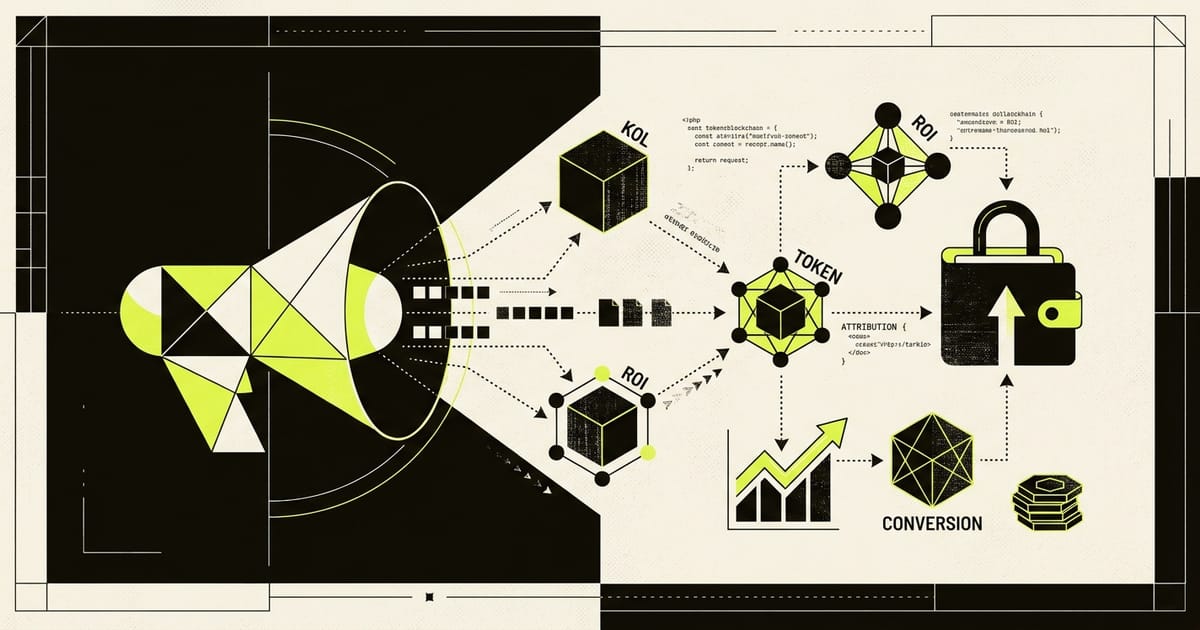
How to Measure KOL Marketing ROI in Crypto
Impressions don't pay for token launches. Set up cost-per-wallet tracking, on-chain attribution and first-action conversion before any KOL post goes live.
Read playbook →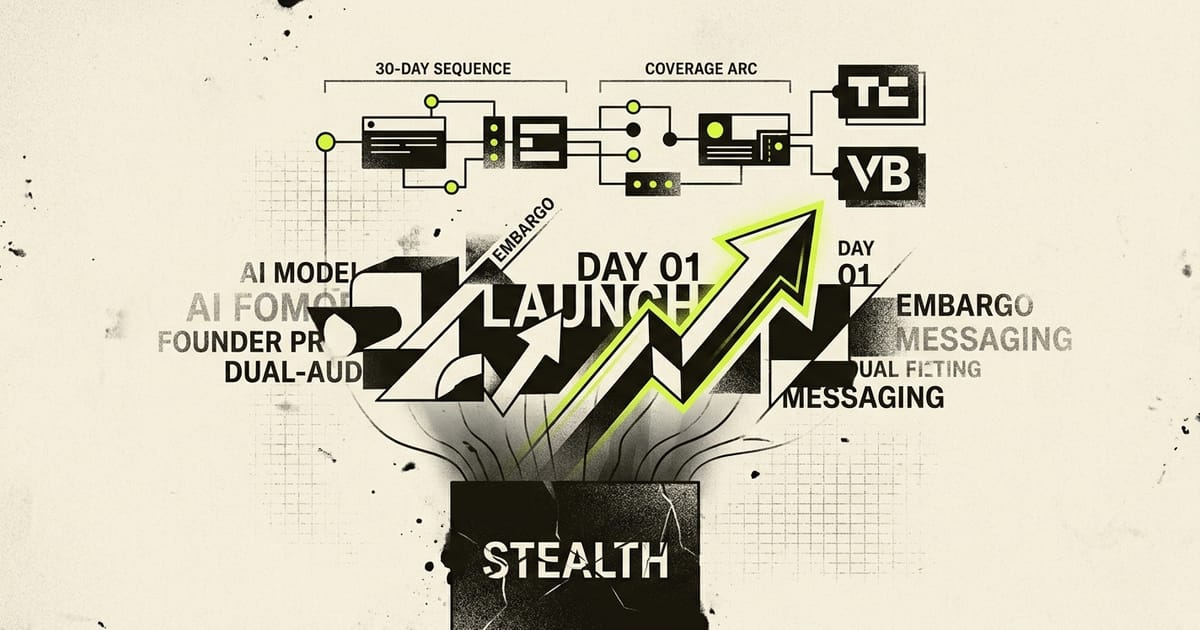
AI Model Launch PR: Stealth to Day-30 Coverage
Most AI model launches get one day of coverage. The full comms arc: pre-launch stealth, embargo, dual-audience messaging and a 30-day sequence.
Read playbook →
Web3 Exploit PR: Comms When a Bridge or Contract Gets Hacked
A bridge exploit or smart contract hack is one of Web3's hardest PR scenarios. The T-72h comms playbook for founders who must respond fast and rebuild trust.
Read playbook →
Web3 PR for Chinese Diaspora: PANews, ChainCatcher, and Beyond
PANews, ChainCatcher, BlockBeats and the WeChat-Telegram ecosystem don't behave like Western crypto media. How to pitch them from outside mainland China.
Read playbook →
Korea Blockchain Week PR Playbook: Win Earned Media at KBW
KBW draws 14,000+ attendees and 300+ side events. A five-week press playbook to win earned media before, during and after Seoul.
Read playbook →
The Founder Media Kit for Web3 and AI: What Journalists Actually Open
Generic press kits get ignored. The founder media kit tier-1 crypto and AI journalists actually open: thesis doc, ready quotes, speaker reel and more.
Read playbook →
Cybersecurity Startup PR at Series A: The 6-Month Plan
Most cybersecurity founders close a Series A with no comms plan. This is the 6-month arc from funding announcement to first Gartner briefing, week by week.
Read playbook →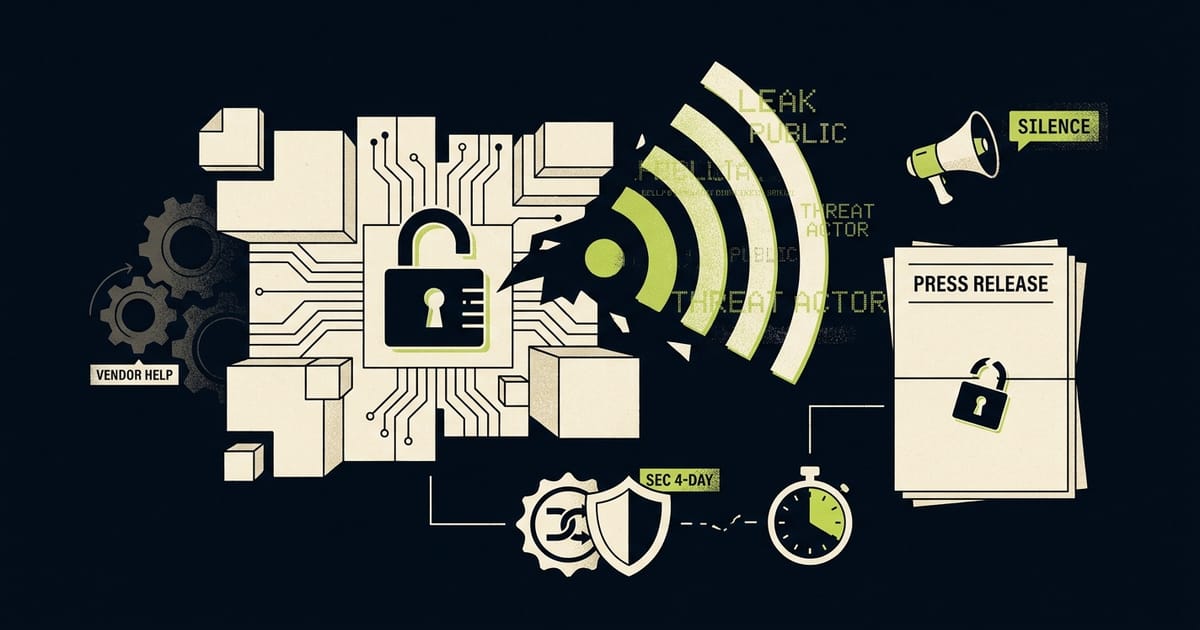
Ransomware PR: When a Threat Actor Goes Public Before You Do
A threat actor posts your data before you've said a word. What to say in the first 4 hours, how to handle the SEC 4-day window, and not look opportunistic.
Read playbook →
Web3 Bear Market PR: Build Your Media Moat Now
Bear markets thin the competition for journalist attention. The case for counter-cyclical PR investment and a 6-month editorial calendar to execute it.
Read playbook →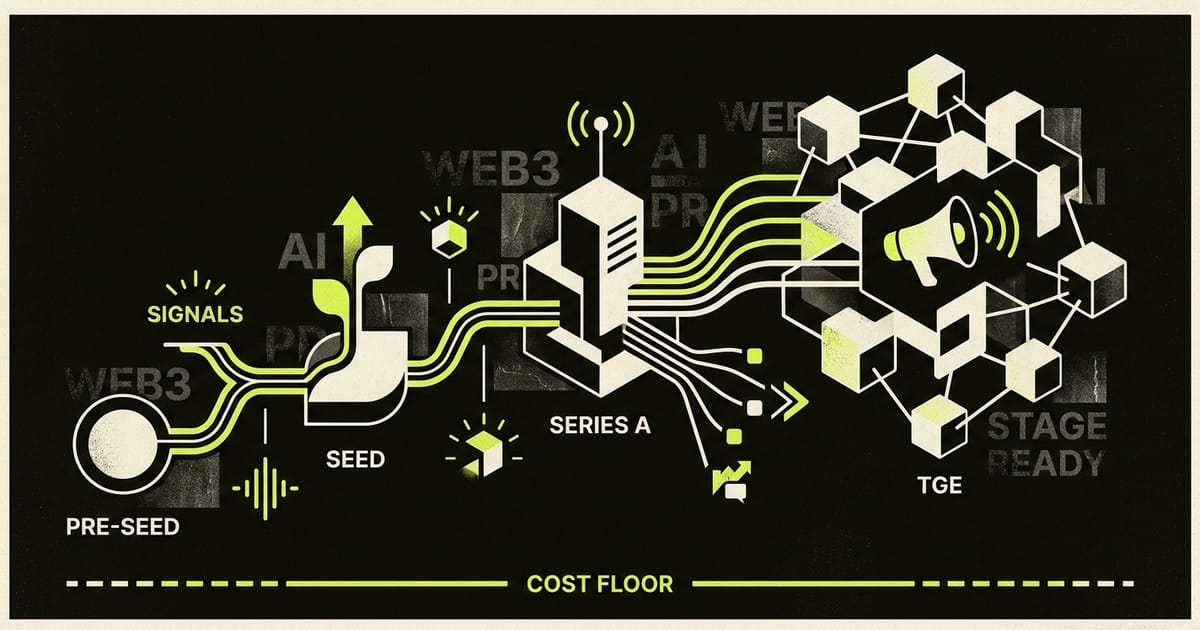
When to Hire PR for a Web3 or AI Startup: Stage-by-Stage
A stage-gated framework mapping what PR can and can't do at pre-seed, seed, Series A, and TGE, plus the cost floor and the signals that tell you you're ready.
Read playbook →
Responsible AI as a PR Asset: Build a Safety Narrative That Earns Tier-1
AI safety messaging is ignored or mocked by tech journalists. The line between safety theater and a credible responsible-AI story that earns Forbes and Wired.
Read playbook →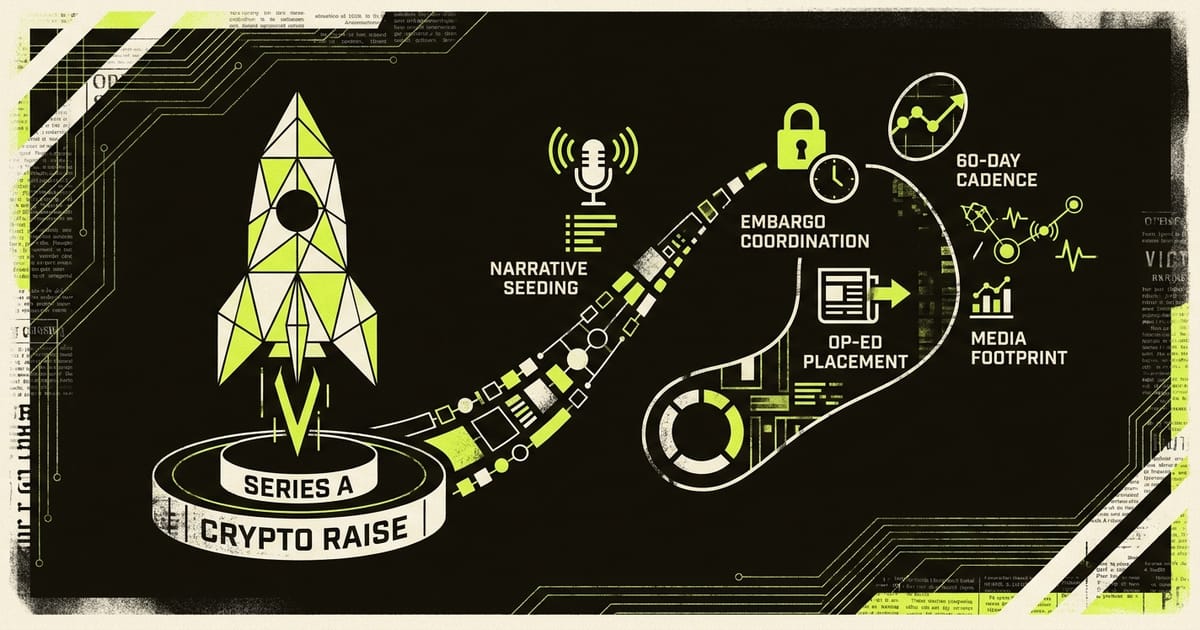
Turn Your Crypto Raise Into a 6-Month Media Footprint
Most Web3 founders treat a Series A as a one-day press event. The 6-month earned media runway: narrative seeding, embargo coordination, op-eds and follow-on.
Read playbook →
Stablecoin PR After the GENIUS Act: The Comms Playbook
The GENIUS Act made stablecoin issuance a regulated category. The PR framework for issuers and payments infrastructure founders in the new environment.
Read playbook →
Stablecoin and RWA PR: How to Earn Bloomberg, FT and WSJ Coverage
Stablecoin issuers and RWA platforms can't pitch like a memecoin. The institutional narrative, the right reporters, and how to survive a Bloomberg fact-check.
Read playbook →
Vietnam Web3 PR Playbook: The Licensed-Exchange Window
Vietnam's Law on Digital Technology Industry is live and five licensed exchanges are coming. The earned-media playbook for Coin68, Blogtienao and beyond.
Read playbook →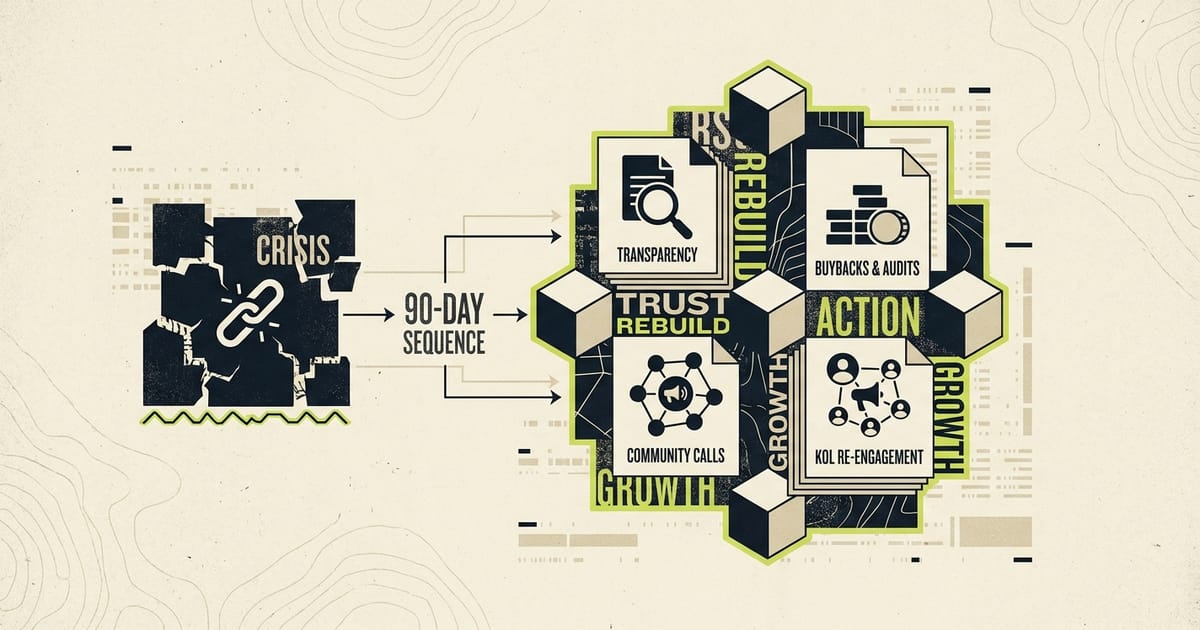
Community Trust After a Web3 Crisis: The 90-Day Sequence
Surviving the news cycle is step one. The 90-day sequence of transparency reports, buybacks, audits, community calls and KOL re-engagement that rebuilds trust.
Read playbook →
Holding Statement Templates for Web3 Crises
Five holding statement templates for Web3 founders: exploit, hot wallet compromise, oracle failure, depeg and rug pull allegation, with channel variants.
Read playbook →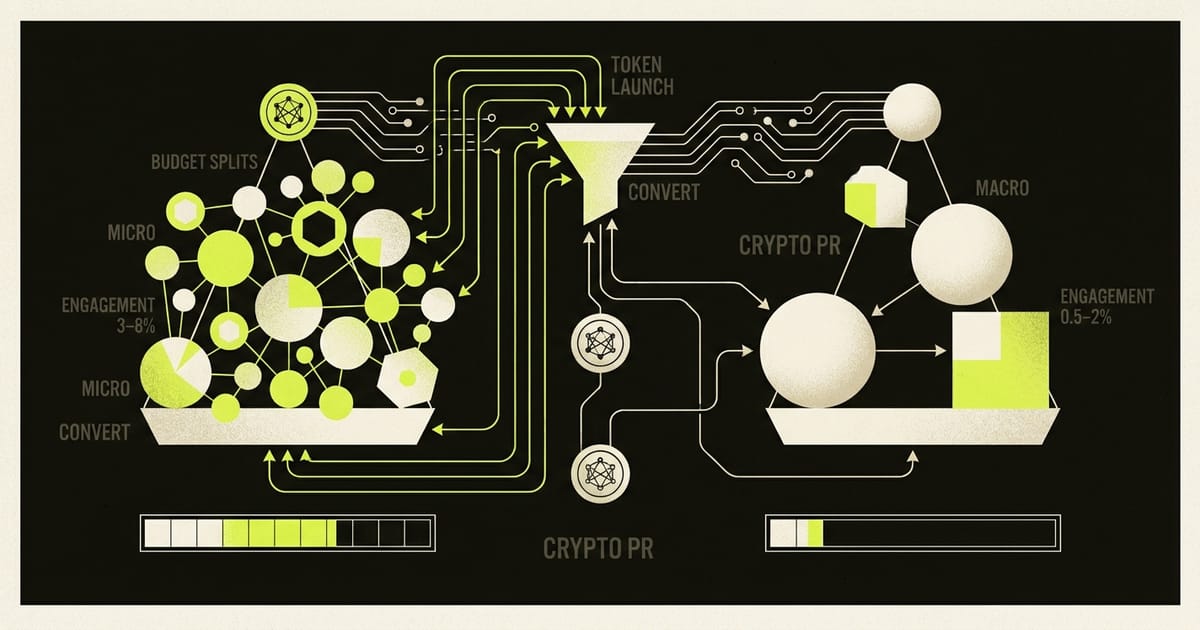
Micro KOL vs Macro KOL: Budget Splits That Actually Convert
Micro KOLs generate 3–8% engagement vs 0.5–2% for macro. Here's the tiered budget split for a token launch that most agencies won't show you, and why.
Read playbook →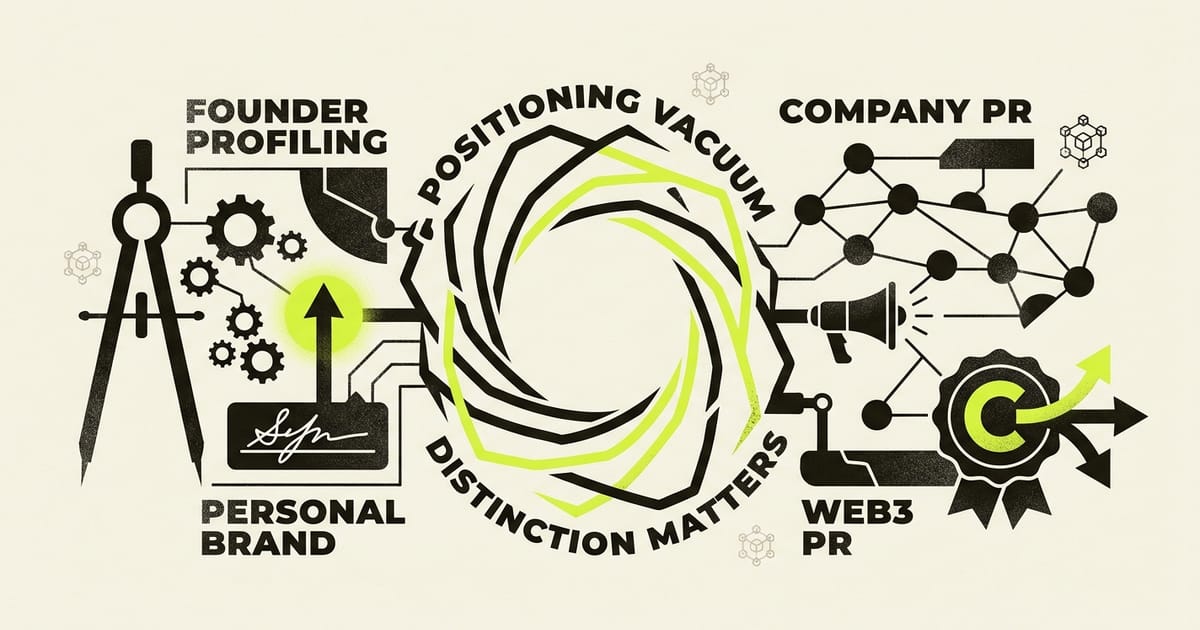
Founder Profiling vs Company PR: Two Different Operating Systems
Mixing founder profiling with company PR creates a positioning vacuum. How to run both in parallel without conflating objectives, and why it matters in Web3.
Read playbook →
The Web3 Founder Speaker Reel: Build One Before the Stage
No Consensus stage yet? How to build a credible Web3 speaker reel from X Spaces, side events and university talks before you've ever headlined.
Read playbook →
The Crypto Podcast Pitch That Actually Gets You Booked
Generic pitch templates won't get you onto Unchained, Bankless, Epicenter or On The Brink. What those shows want, with a line-by-line teardown.
Read playbook →
On-Chain Data as PR Ammunition for Web3 Founders
TVL milestones, wallet growth and governance activity are journalist-ready data. How to turn them into tier-1 coverage in Bloomberg and The Block.
Read playbook →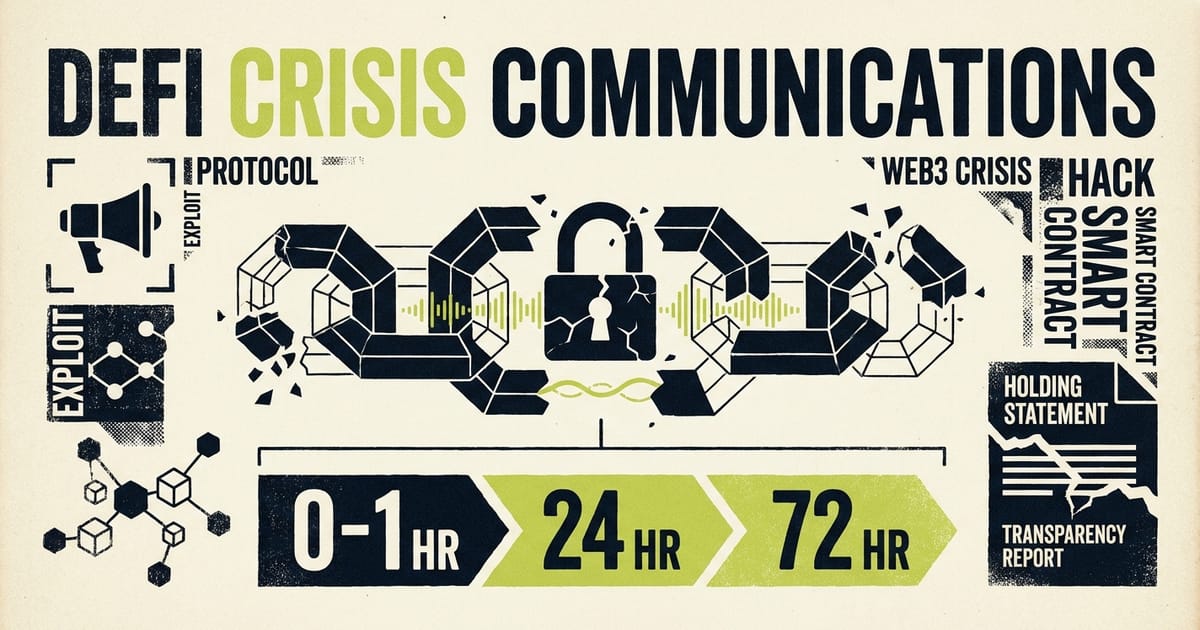
DeFi Exploit Comms: The First 72 Hours After a Hack
A communications playbook for DeFi protocols hit by a smart contract hack or bridge failure, from the first holding statement to the transparency report.
Read playbook →
Crypto Exchange Listing PR: The 30-Day Sequence
A confirmed Binance, OKX, or Coinbase listing is your biggest PR moment of the year. Here's the exact 30-day comms sequence, week by week, to make it land.
Read playbook →
Web3 Reputational Risk Register: 12 Crises to Plan For
Most Web3 crisis plans only cover hacks. 12 reputational risk scenarios, from token unlock controversy to KOL betrayal, with stakeholders, channels and tone.
Read playbook →
Web3 Security Startup PR: How to Win Tier-1 Coverage
Audit firms, bug bounty platforms and chain monitors hold crypto's best proof points but can't publish most of them. The PR playbook for security founders.
Read playbook →
Crypto KOL Waves: The Whisper-Tease-Shout Sequence
The three-wave KOL sequence that drives wallet activations at a token launch: who posts when, what to brief, how to sync with your embargo and attribute.
Read playbook →
Reactive Commentary: How Web3 and AI Founders Get Quoted Without Their Own News
Most Web3 and AI founders wait for a launch to do PR. Reactive commentary is faster: monitor beats, draft quote-ready replies, turn one placement into a source.
Read playbook →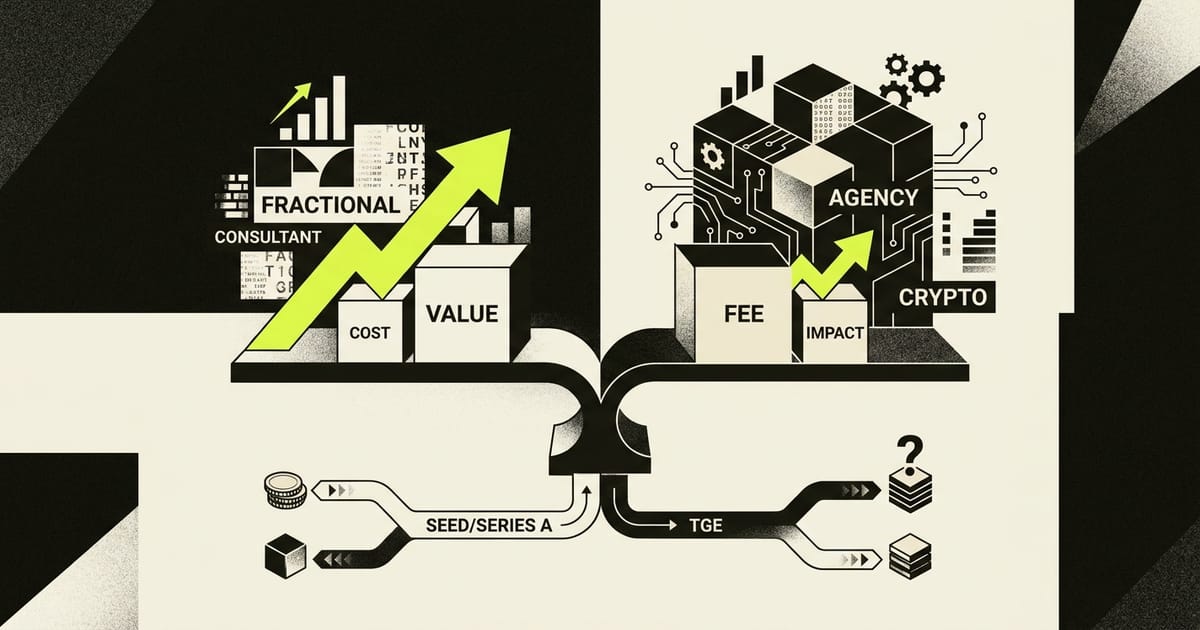
Fractional PR vs Crypto PR Agency: Cost-Benefit Analysis
Seed, Series A or TGE: a cost-benefit breakdown of the fractional PR model against full-service crypto PR agencies, so you stop overpaying for junior attention.
Read playbook →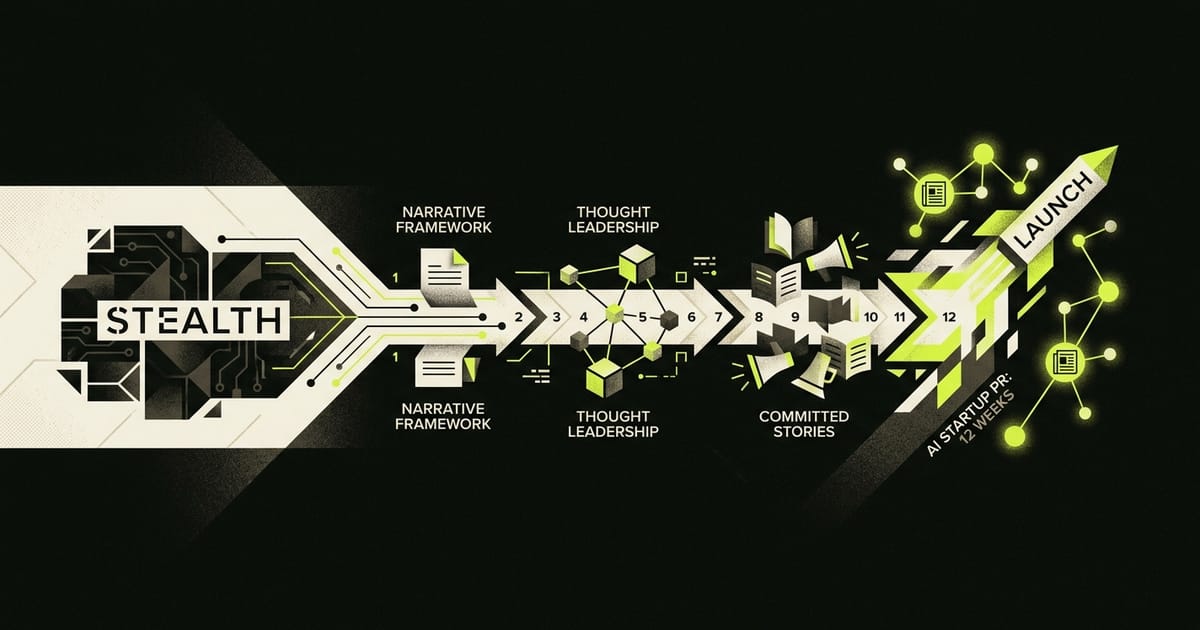
The AI Startup Stealth-to-Launch PR Timeline: 12 Weeks
A week-by-week PR playbook for AI founders: from narrative framework to 4–6 committed stories on launch day. No press release hope required.
Read playbook →
LinkedIn vs X for Web3 Founders: Run Both Without Burning Out
X rewards hot takes and LinkedIn rewards depth, and cross-posting tanks both. The split system Web3 founders use to feed both platforms from one source.
Read playbook →
Embargo, Exclusive, Briefing: Which One to Use
Web3 founders confuse embargo, exclusive and background briefing, and burn journalist trust doing it. The decision framework to get it right every time.
Read playbook →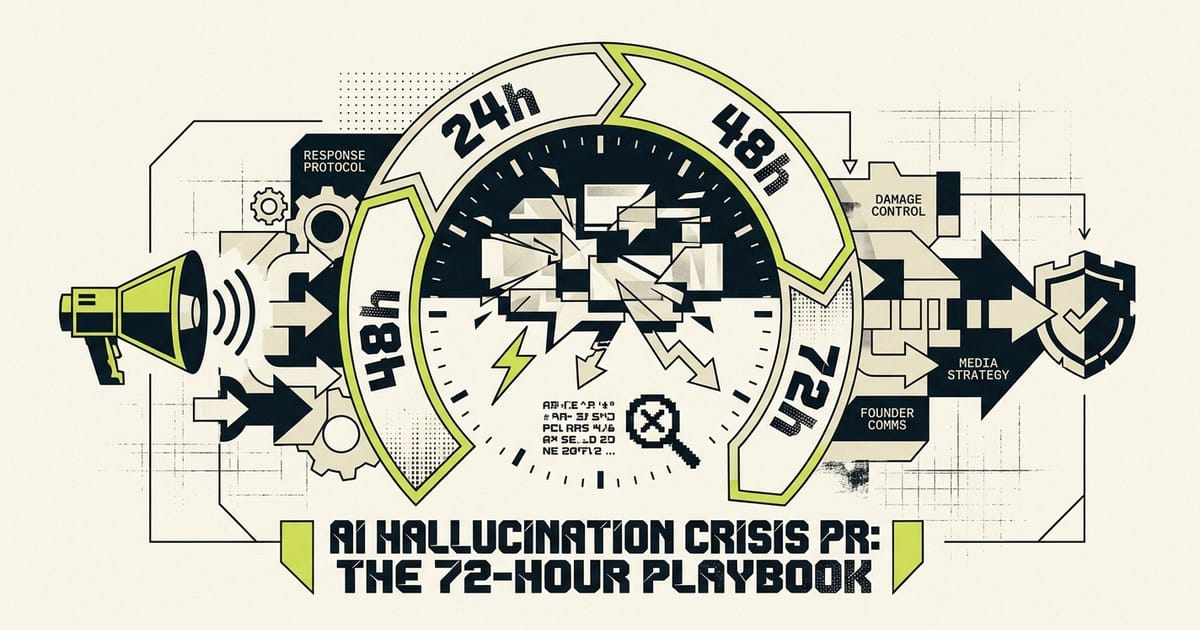
AI Hallucination Crisis PR: The 72-Hour Playbook
Your AI product just generated a confidently wrong answer and a journalist screenshotted it. Here's the 72-hour communications framework that limits the damage.
Read playbook →
APAC Web3 PR: Five Localisation Mistakes That Kill Credibility
Most global Web3 founders make the same five APAC PR mistakes in Korea, Japan, and India. Here's the pre-flight checklist to fix them before your launch.
Read playbook →
Open Source AI Model PR: The Dual-Audience Launch Playbook
An open-weight AI model launch must satisfy developers who tear down your evals in hours and journalists who need a hook by 8 AM. The full comms architecture.
Read playbook →
AI Founder Thought Leadership: Build a POV That LLMs Cite
Most AI founder thought leadership reads like ChatGPT wrote it, so ChatGPT won't cite it. How to build a POV that answer engines treat as a primary source.
Read playbook →
Funding Announcement PR: The 4-Week Sprint for Web3 Founders
A week-by-week PR sprint for Web3 and AI founders closing a round: embargo sequencing, SAFE vs token disclosure, exclusive vs simultaneous, week-5 byline.
Read playbook →
AI Security Startup PR: How to Run a Dual-Track Pitch
AI security companies straddle two journalist beats with opposite editorial cultures. How to run a dual-track PR program that earns coverage in both.
Read playbook →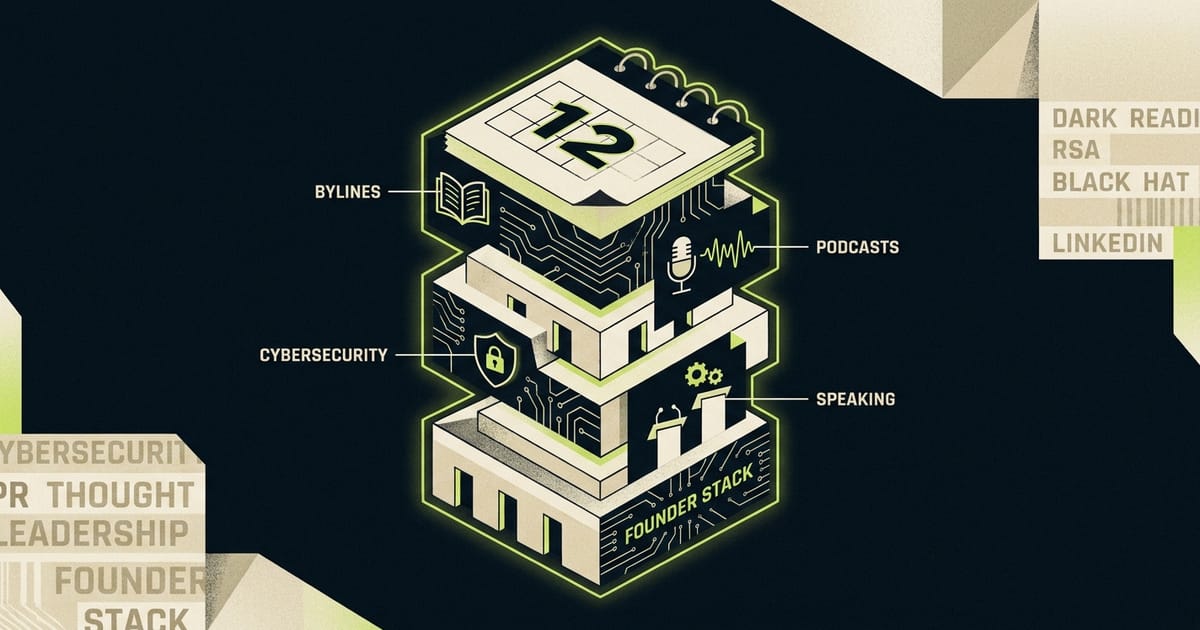
The Cybersecurity Founder Thought Leadership Stack
Dark Reading bylines, RSA and Black Hat slots, podcasts and LinkedIn content mapped into a 12-month calendar with real deadlines for cybersecurity founders.
Read playbook →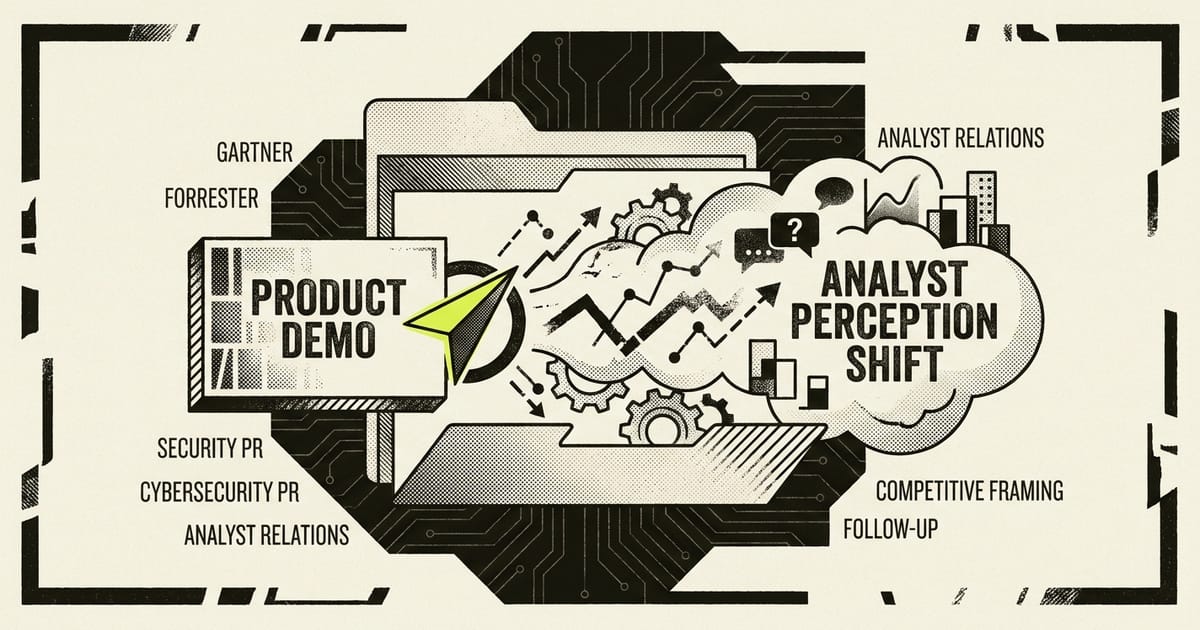
Cyber Analyst Briefing Decks That Change How Gartner and Forrester See You
Most analyst briefing decks are product demos in disguise. The structure that shifts perception: first five minutes, customer evidence, framing and follow-up.
Read playbook →
Op-Ed Ghostwriting for Web3 Founders: What Forbes and CoinDesk Run
Most founder op-eds get rejected because they read like product marketing. The structure, thesis format and rewrite loop that lands CoinDesk, Decrypt, Forbes.
Read playbook →
Original Threat Research as PR Fuel for Cybersecurity Startups
Security journalists don't cover product news, they cover threats and data. How to build a research program that earns tier-1 coverage as a repeatable output.
Read playbook →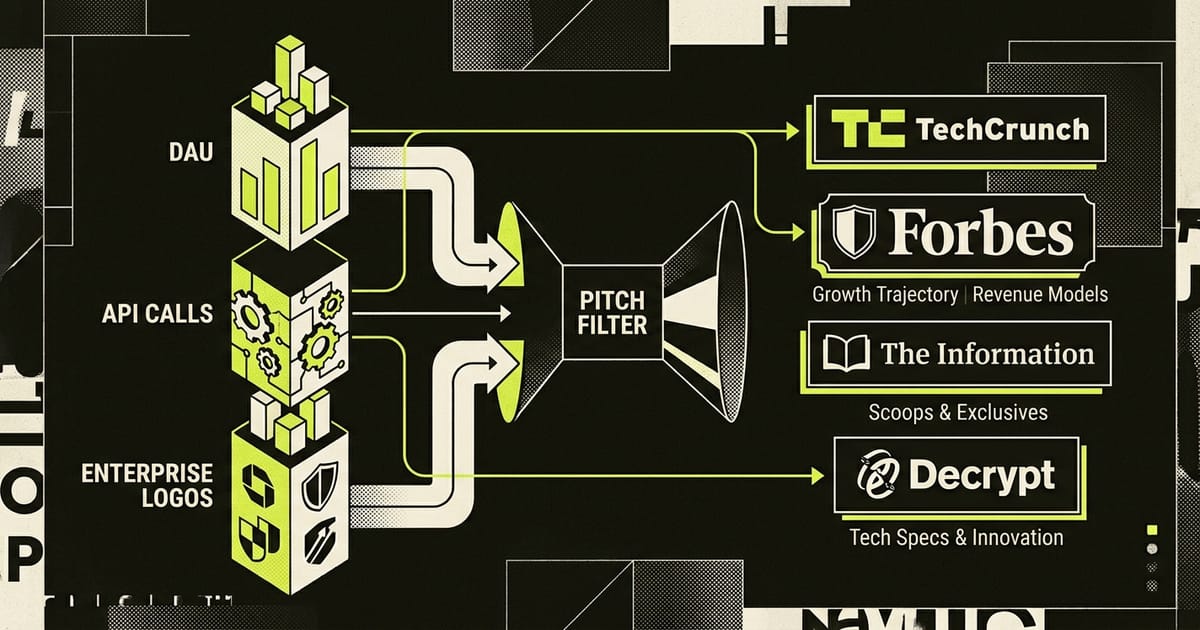
AI Traction Metrics as PR Hooks: DAU, API Calls, Enterprise Logos
Every AI founder has metrics, but few know which move which journalist. A map of what TechCrunch, Forbes, The Information and Decrypt want to see in a pitch.
Read playbook →
How to Pitch The Information: 8 Steps for AI Founders
The Information is the hardest tier-1 outlet to crack. An 8-step briefing sequence that takes AI and enterprise founders from unknown to recurring source.
Read playbook →
Web3 PR Beyond Singapore: Vietnam, Indonesia, Thailand
A founder's guide to earning media in Vietnam, Indonesia, and Thailand: three distinct press ecosystems that a Singapore-only PR strategy misses entirely.
Read playbook →
VAUPA, FSA FIEA, and MAS: APAC Regulatory Messaging for Web3 Founders
Korea's VAUPA, Japan's FIEA reclassification and Singapore's DTSP framework set distinct messaging rules. A PR compliance cheat sheet for all three.
Read playbook →
Pitching Wired, MIT Tech Review, and Bloomberg Security: What Works
Most cybersecurity startups pitch mainstream press the wrong way. How to find pitchable stories by outlet, build the pitch and use a Wired hit with Gartner.
Read playbook →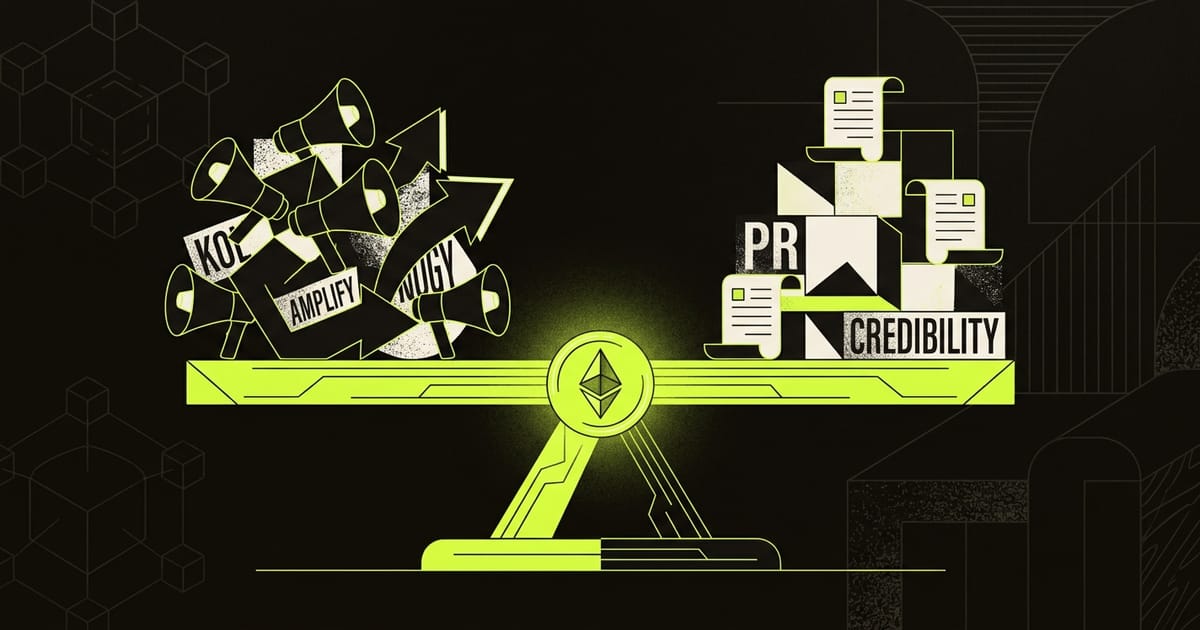
KOL Marketing vs Earned PR in Crypto: Budget Allocation Guide
KOLs and earned PR aren't competing budget lines; they do different jobs at different stages. How to split comms spend across a token launch.
Read playbook →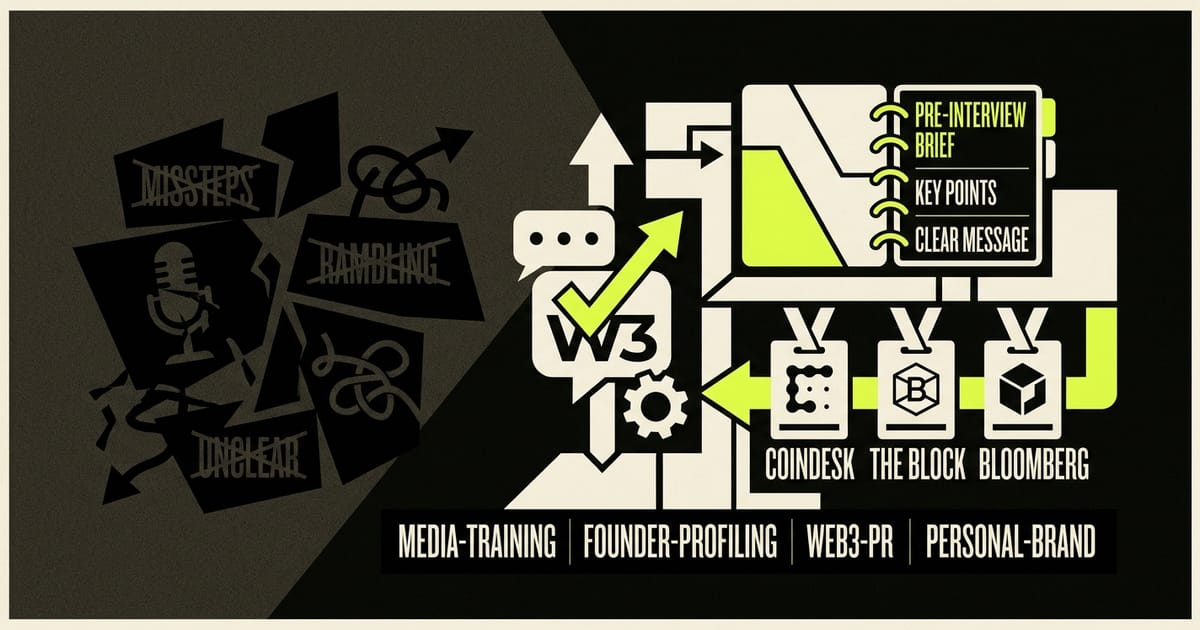
The Web3 Founder Pre-Interview Brief for Tier-1 Media
Five mistakes founders make before and during a CoinDesk, The Block, or Bloomberg interview, and exactly what to say instead. Your pre-interview brief.
Read playbook →
KuppingerCole vs Gartner vs Forrester: Which Analyst Report First?
Gartner's Magic Quadrant has revenue floors that eliminate most early-stage security startups. Here's how to map the right analyst report to your actual stage.
Read playbook →
Your Conference Talk as a 30-Day Earned Media Campaign
Most founders walk off stage and go back to building. The post-event PR sequence that turns one conference talk into 30 days of earned media.
Read playbook →
AI Startup Series A PR: Build a 6-Month Category Campaign
Your Series A buys 48 hours of attention. The 6-month campaign from pre-funding narrative to analyst briefings that turn coverage into enterprise pipeline.
Read playbook →
Pitching Agentic AI to Journalists Who've Seen It All
AI agent pitches go straight to the bin in 2026. How to reframe your agentic startup story around angles journalists still cover, and which outlets still care.
Read playbook →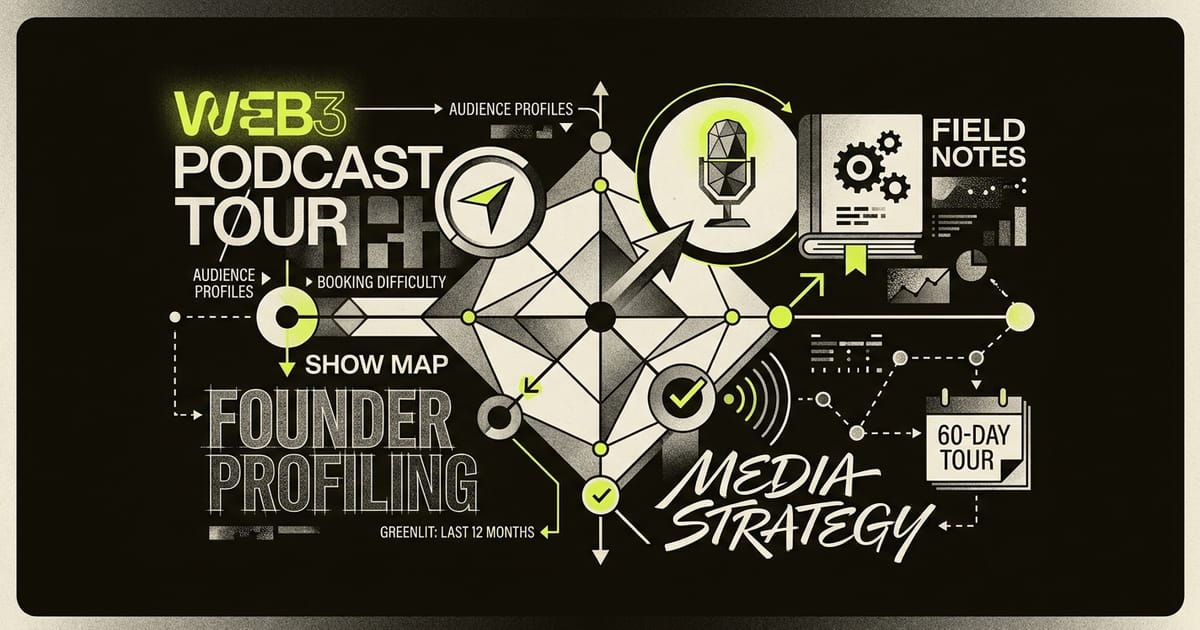
Web3 Podcast Show Map: Book a 60-Day Founder Tour
The show map Web3 founders need before pitching a single podcast: audience profiles, booking difficulty and what each host has greenlit in the last 12 months.
Read playbook →
Enterprise AI GTM Comms: Align Press, Analyst, and Sales
Enterprise AI founders run three contradictory stories at once. The comms alignment playbook: one source-of-truth doc, channel ownership and launch sequencing.
Read playbook →
AI Startup PR: Translating Technical Products for Business Press
Technical AI founders over-explain architecture and under-explain the problem. How to turn LLM, agent and infrastructure stories into pitches Forbes runs.
Read playbook →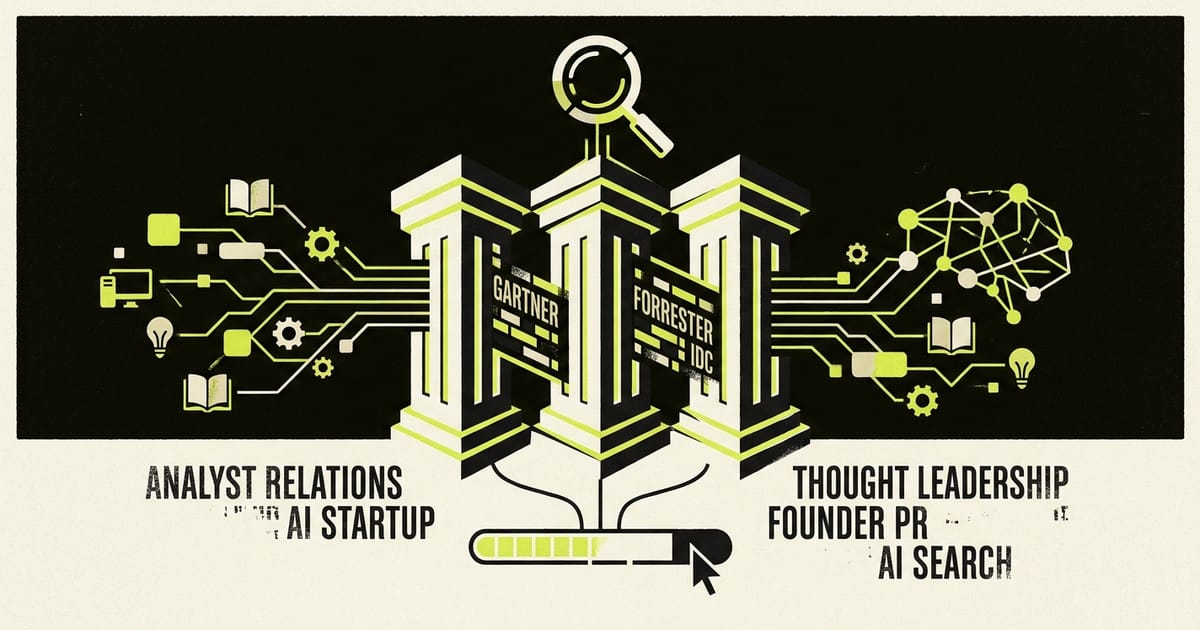
Analyst Relations for AI Startups: Gartner, Forrester and IDC
AI startups under $5M ARR can run a credible analyst program. Which reports to target, what your first briefing needs, and how citations feed AI search.
Read playbook →
How to Write a Founder Bio That Journalists Actually Use
Most Web3 founder bios read like a LinkedIn wall or a product pitch. The anatomy of a bio that earns press quotes, speaking slots and podcast invites.
Read playbook →
APAC Web3 X Strategy: Korea, Japan, India Are Not the Same
One translated English X account across APAC fails fast. A market-by-market breakdown of X behaviour in Korea, Japan and India for Web3 founders.
Read playbook →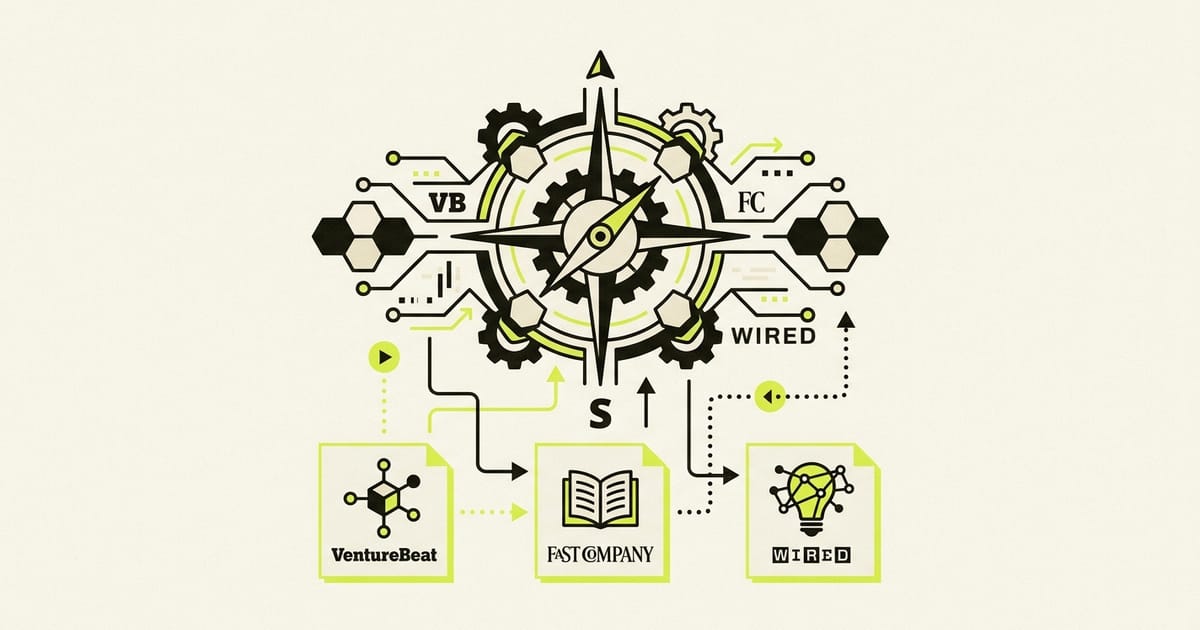
VentureBeat, Fast Company, and Wired: A Submission Map for Web3 and AI Founders
An outlet-by-outlet guide for Web3 and AI founders entering mainstream tech press: VentureBeat's DataDecisionMakers, Fast Company's Work Life desk and Wired.
Read playbook →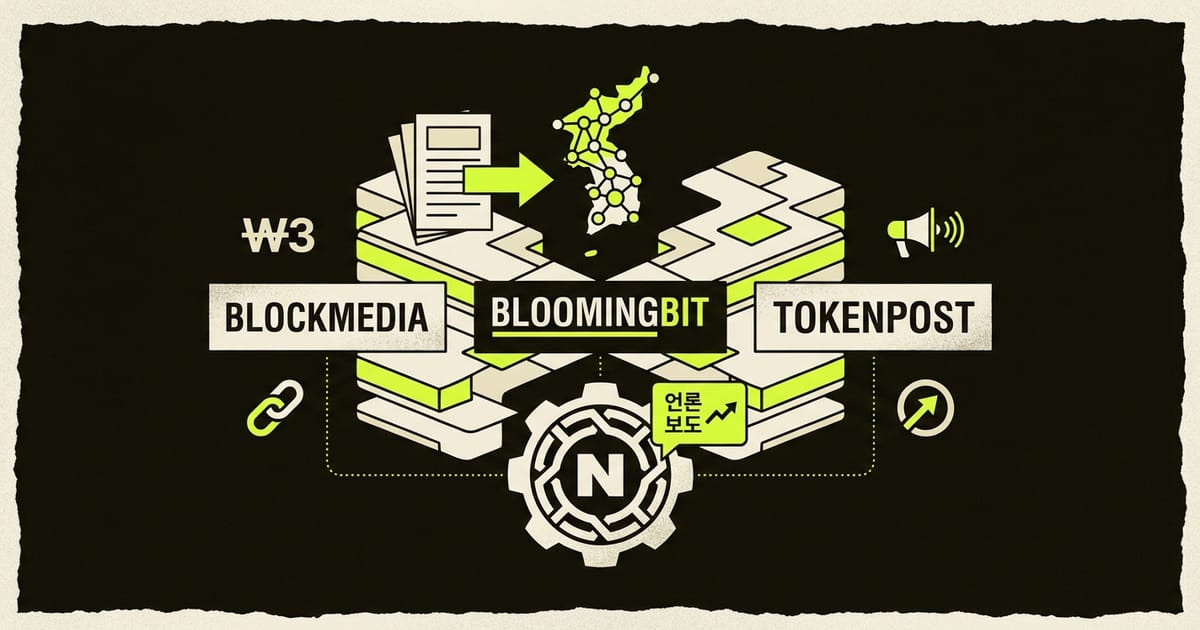
How to Pitch Korean Crypto Journalists in 2026
A reporter-by-reporter guide to Blockmedia, BloomingBit and TokenPost: what each prioritizes, how to pitch in Korean, and why Naver syndication matters.
Read playbook →
Hong Kong Web3 PR Playbook: SFC VASP, Forkast, and the China-Bridge Narrative
A field-tested playbook for a compliance-forward Hong Kong Web3 PR strategy across Forkast, SCMP, ChainCatcher and Chinese-diaspora crypto media in 2025–26.
Read playbook →
Regulatory PR for Web3 Founders: MiCA, GENIUS Act, SEC Clarity as a Media Wedge
MiCA, the GENIUS Act and Project Crypto are Web3's biggest untapped PR angles. How to turn compliance milestones into Bloomberg and FT coverage in 2026.
Read playbook →
Crypto PR for Fundraising Rounds: What Investors Read
A playbook for Web3 and AI founders in the 4-to-8-week window before a round closes: which outlets carry weight, when to announce, how to pitch the exclusive.
Read playbook →
Paid Shill Backlash in Crypto: Run a KOL Campaign That Won't Wreck You
The ZachXBT exposé named 200+ undisclosed KOL deals. This is how to run an aggressive KOL program without becoming the next cautionary story in crypto PR.
Read playbook →
APAC Crypto KOL Strategy: Why Your US Roster Fails
A US KOL campaign pasted onto APAC fails. Korea, Japan, Vietnam and Singapore differ on platforms, trust signals and compliance. A country-by-country playbook.
Read playbook →
The KOL Round Problem: Token Allocations and Disclosure
KOL rounds are standard, but fewer than 5 in 160 documented cases disclosed properly. The incentive problem, regulatory exposure and contract clauses.
Read playbook →
The 90-Day Founder Profile Build: From Unknown to Quoted
A month-by-month sequence for Web3 and AI founders who want to get quoted in CoinDesk, Forbes, and Decrypt: reactive sourcing, op-ed placement, podcast pitches.
Read playbook →
AI Startup PR for Non-Technical Founders: Make Your Story Land
LLM, agent or infrastructure product? How non-technical AI founders translate tech into journalist-ready business stories and earn tier-1 coverage in 2026.
Read playbook →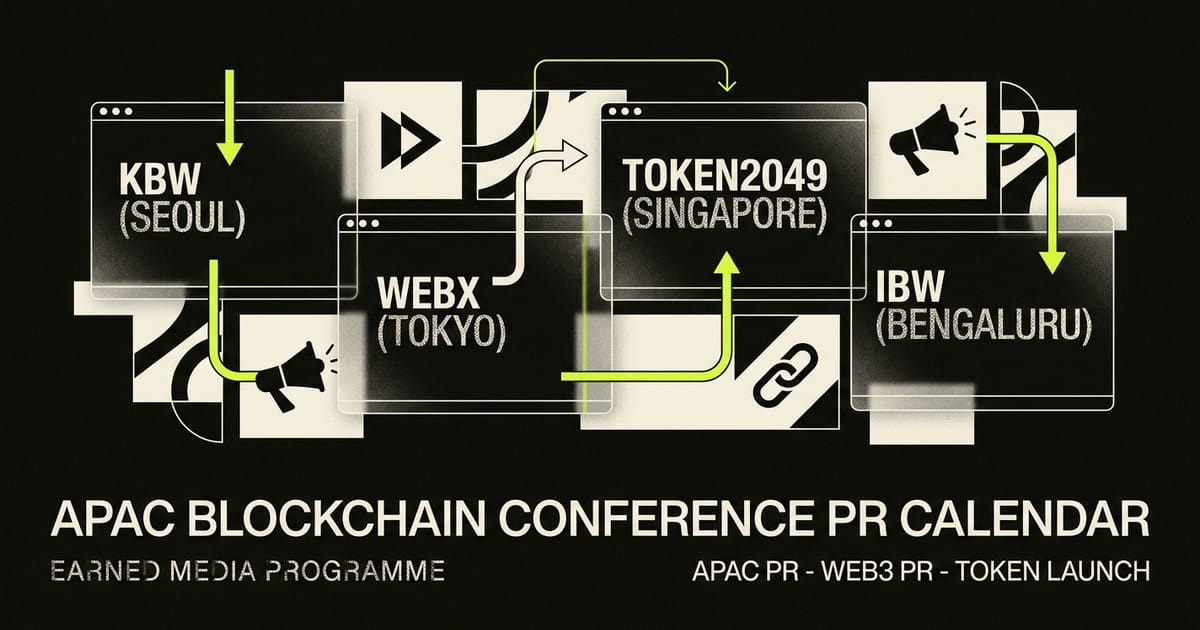
APAC Blockchain Conference PR Calendar: KBW, WebX, Token2049, IBW
The four-window APAC PR calendar across Korea Blockchain Week, WebX Tokyo, Token2049 Singapore and India Blockchain Week for year-long earned media.
Read playbook →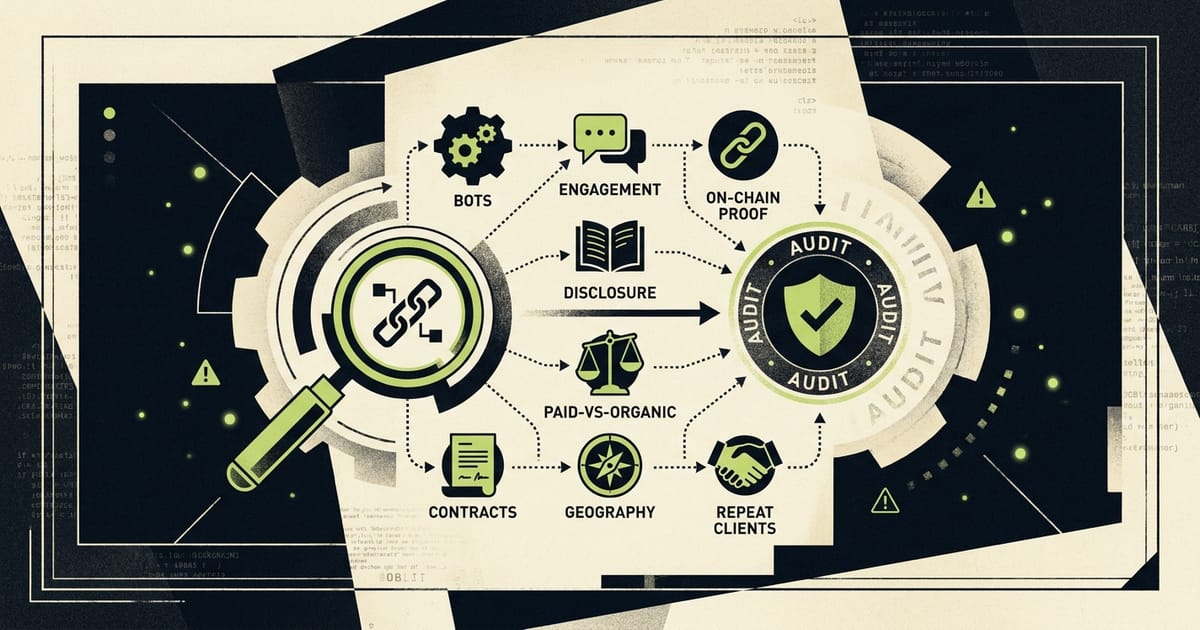
How to Vet a Crypto KOL: The 8-Point Fraud Audit
Before you pay a crypto KOL, run this 8-point audit: bots, engagement quality, wallet proof, disclosure history, paid ratio, geography and contract red flags.
Read playbook →
The Op-Ed Pitch Email That Gets Commissioned
Most founder op-ed pitches get deleted on sight. The 150-word structure that gets commissioned by CoinDesk, Cointelegraph and Decrypt, with three examples.
Read playbook →
India Web3 PR Playbook: Inc42, ET Tech, and the Tax Problem
India leads global crypto with 119M users, yet a 30% flat gains tax traps most pitches. How to frame your story for Inc42, ET Tech and Business Standard.
Read playbook →
Crypto KOL Pricing in 2026: The Full Tier Rate Card
What crypto KOLs charge in 2026, nano to macro, across X, YouTube and Telegram, plus three payment models and hidden markups that add 40–100%.
Read playbook →
Pick One Thesis or Kill Your Personal Brand
Web3 and AI founders who try to own DeFi, AI agents, and policy at once land nowhere. Here's the thesis-selection process I run with every founder I profile.
Read playbook →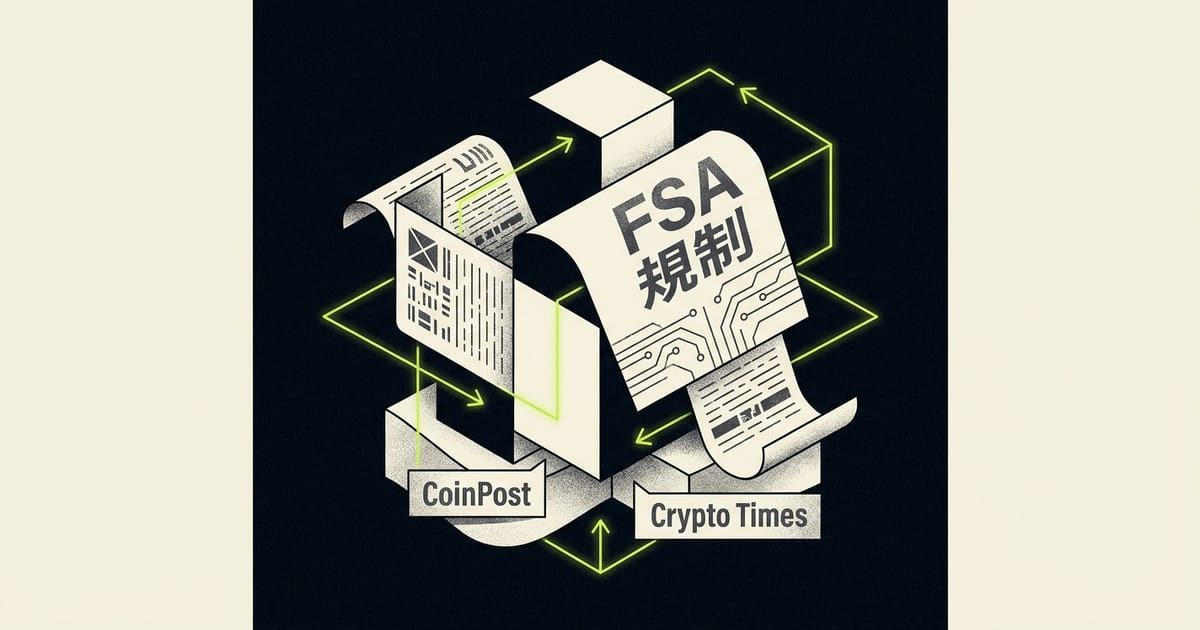
Japan Web3 PR: CoinPost, Crypto Times, FSA Messaging
Japan has 12M crypto users and a 2026 FIEA reclassification that makes FSA alignment table stakes for CoinPost coverage. A playbook for foreign founders.
Read playbook →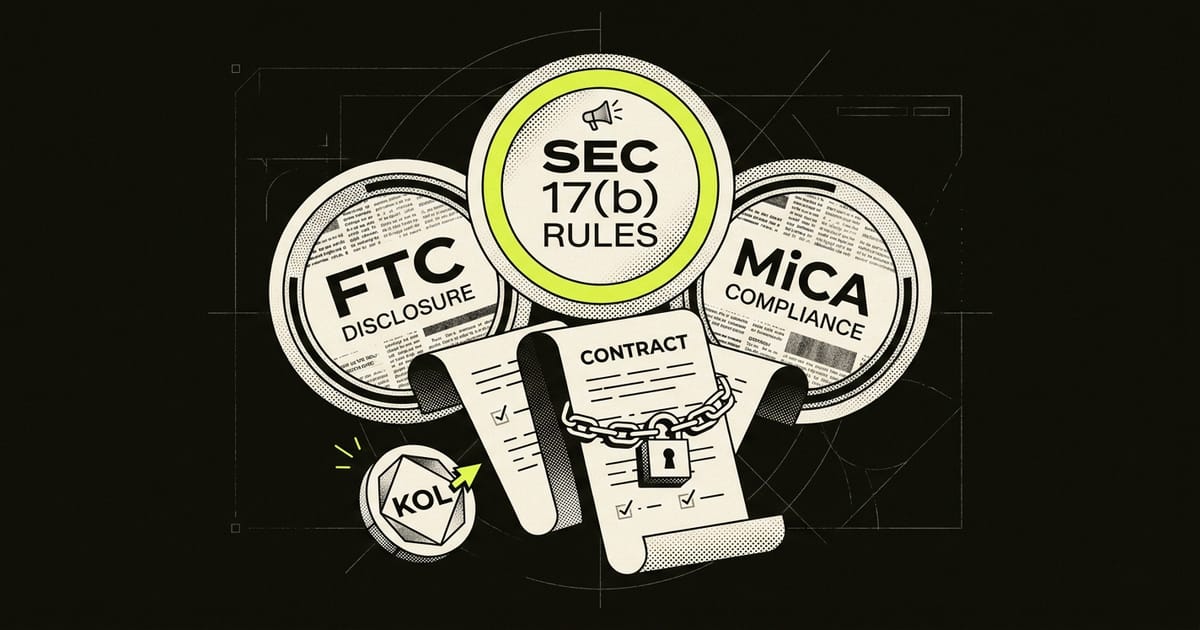
Crypto KOL Disclosure Rules: FTC, SEC, and MiCA in 2026
Three regulatory regimes overlap on every crypto KOL campaign. What the FTC, SEC Section 17(b) and MiCA require, plus the contract language to include.
Read playbook →
Breach Disclosure PR Timing: The 72-Hour Comms Sequence
The SEC's 4-day rule and GDPR's 72-hour clock overlap in ways most comms teams aren't ready for. The exact stakeholder sequence from a PR operator's lens.
Read playbook →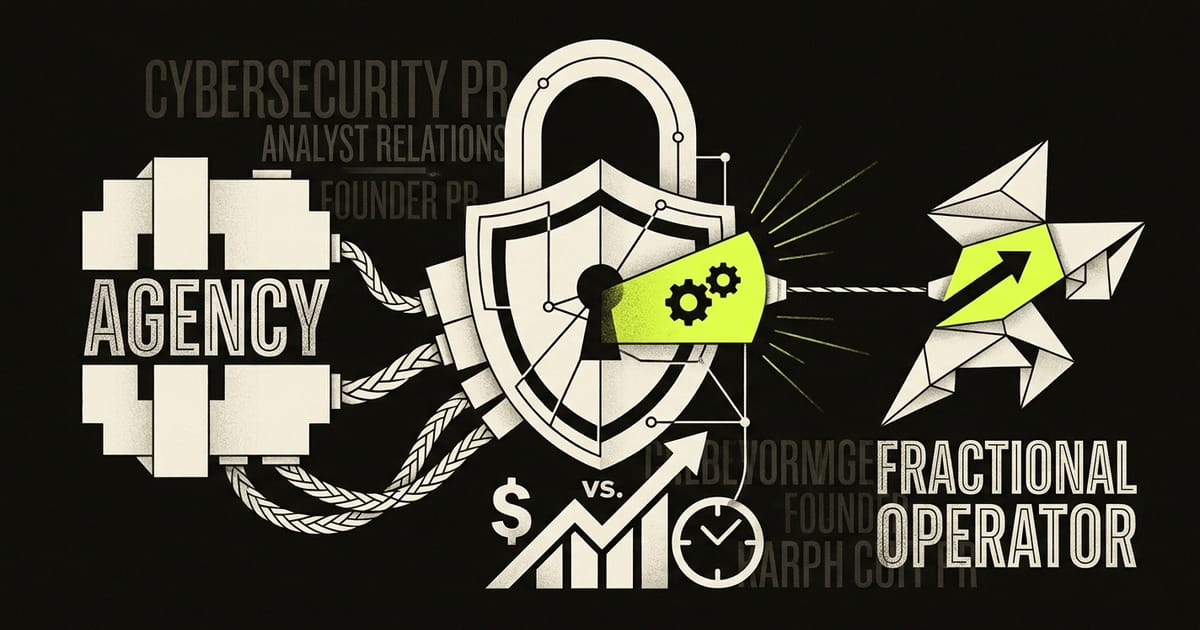
Fractional PR for Cybersecurity Startups vs. Agency: An Honest Comparison
A full-service cybersecurity PR agency costs $15K–$35K a month with a junior team. When a fractional senior operator beats that model, and when it doesn't.
Read playbook →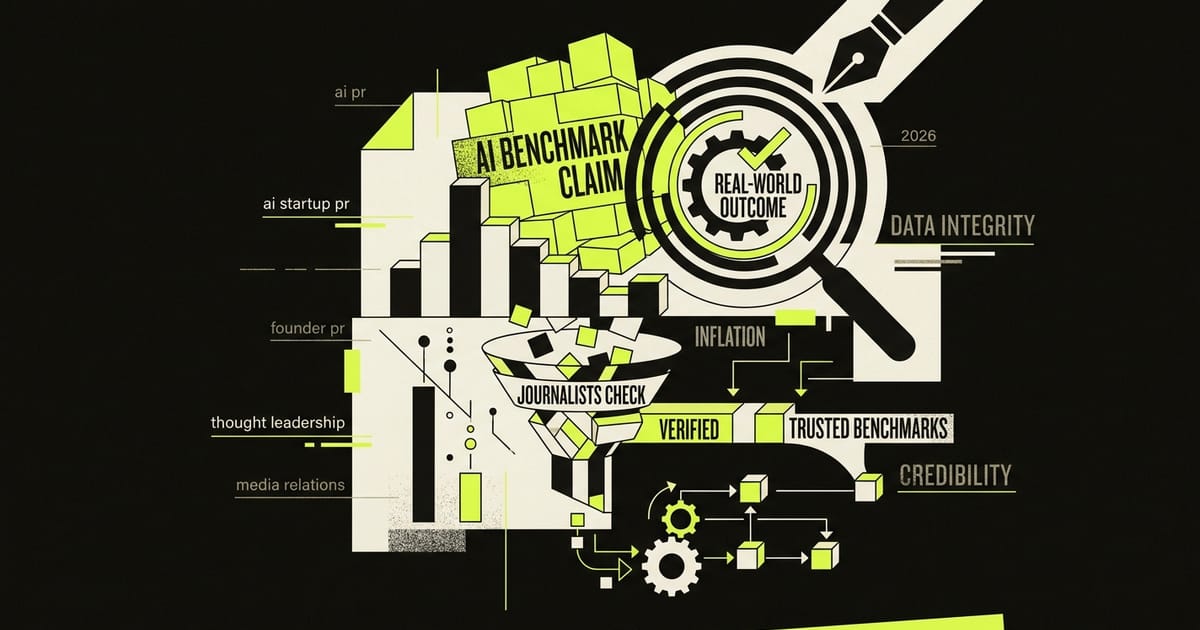
AI Benchmark Claims in PR: What Journalists Actually Check
Benchmark inflation is killing AI startup credibility. Which benchmarks journalists trust in 2026, how to frame your numbers, and when to lead with outcomes.
Read playbook →
How to Pitch Dark Reading, CyberScoop, SC Media and The Record in 2026
Each security trade outlet has a distinct editorial identity that generalist PR firms get wrong. A beat-by-beat guide with pitch format templates for each.
Read playbook →
Gartner Coverage for Cybersecurity Startups: The 18-Month AR Playbook
Most cybersecurity founders chase the wrong Gartner entry point. An 18-month AR playbook mapping Cool Vendor, Market Guide and Magic Quadrant.
Read playbook →
Cybersecurity PR at RSA and Black Hat: The 90-Day Sprint
RSA draws 44,000 attendees and 400+ media, yet most security startups have no PR plan. The 90-day sprint that turns one week into 30 days of coverage.
Read playbook →
5 PR Metrics Web3 Founders Should Report to the Board
Most Web3 PR reports are full of clip counts that mean nothing to investors. The 5-number board dashboard that maps PR spend to outcomes finance understands.
Read playbook →
Low Float, High FDV: The Founder's PR Playbook
Your tokenomics are already on trial. How to get ahead of FDV criticism before listing day, what to say under embargo, and how to shift the post-TGE narrative.
Read playbook →
How to Pitch Decrypt in 2026: Beat Map, Filter, Pitch Format
Decrypt is not CoinDesk with a friendlier face. Its six editorial beats, what its editors skip, and a pitch format built from real placements.
Read playbook →
Fractional PR vs Crypto Agency Retainer: What You Actually Pay For
The 2026 pricing breakdown for Web3 and AI founders choosing between a fractional PR operator and a full agency retainer. Just the math and trade-offs.
Read playbook →
Airdrop Backlash PR: What to Do When #YourProject Scam Trends
When your TGE triggers #ProjectScam on X, silence and defensiveness both accelerate the crisis. The 60-minute PR framework and 30-day rebuild sequence.
Read playbook →
Token Price Drop After TGE: The 72-Hour Comms Playbook
Your token fell 40–60% in 48 hours and the community says team dump. The statements, on-chain proof and AMA structure that protect your credibility.
Read playbook →
SEC Wells Notice PR Playbook for Crypto Founders
A Wells Notice is a live crisis, not just a legal event. The comms sequence: holding statement at 4 hours, stakeholder briefing at 24, founder commentary at 72.
Read playbook →
Airdrop Eligibility Announcement PR: Stop the Farming Narrative
The farming narrative wins in the 72 hours before your snapshot date, not after. Here's the PR architecture that keeps reporters off that lead.
Read playbook →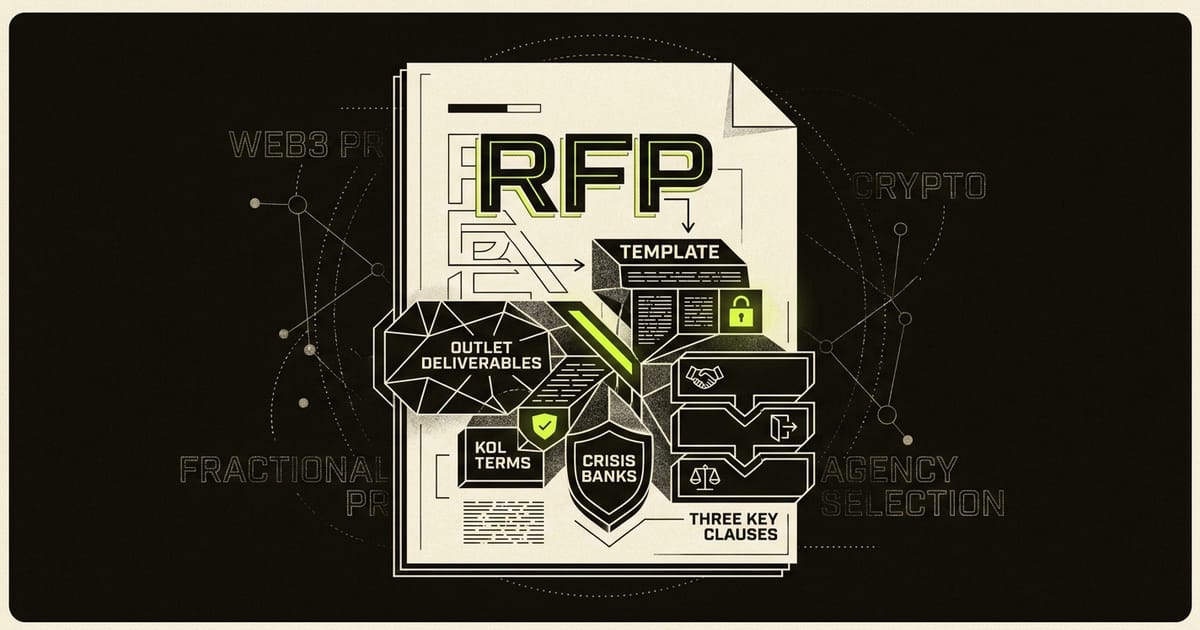
The Web3 PR Agency RFP: A Line-by-Line Template
Vague agency scopes and no exit clauses burn Web3 founders. A full RFP template: outlet-level deliverables, KOL terms, crisis banks and key contract clauses.
Read playbook →
How to Pitch Bloomberg Crypto: What Web3 Founders Get Wrong
Bloomberg Crypto runs on a different editorial standard than CoinDesk or Decrypt, and a trade-press pitch gets ignored here. What actually works.
Read playbook →
The Web3 Press Kit: What to Build Before You Pitch
Most Web3 founders pitch CoinDesk with a deck and a Telegram link. What journalists need: fact sheet, bio, on-chain links, audit refs and a clean boilerplate.
Read playbook →
The Crypto Pitch Subject Line Formula That Gets CoinDesk and The Block to Open
The exact subject line formulas that get crypto pitches opened at CoinDesk, The Block, and Decrypt, with annotated good and bad examples from real campaigns.
Read playbook →
AI Agent On-Chain PR: Two Pitches, Two Rooms, One Thesis
On-chain AI agent projects face a split audience: Forbes wants benchmarks and a demo, CoinDesk wants traction and the raise. One two-layer narrative wins both.
Read playbook →
DePIN PR Playbook: Node Counts to Tier-1 Narrative
Most DePIN founders can explain tokenomics but can't pitch a Forbes editor in one sentence. Narrative, outlet targeting and embargo timing for 2026.
Read playbook →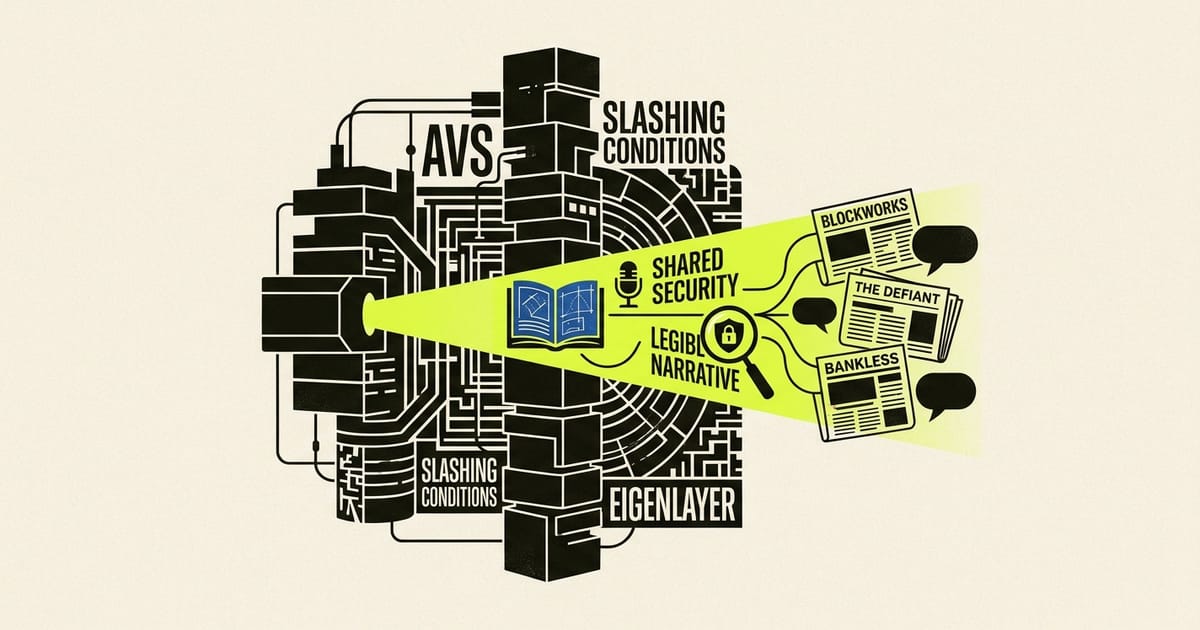
Restaking Protocol PR: Making Shared Security Legible
How restaking founders can pitch Blockworks, The Defiant and Bankless without losing reporters in jargon: analogies, journalist targets and narrative checks.
Read playbook →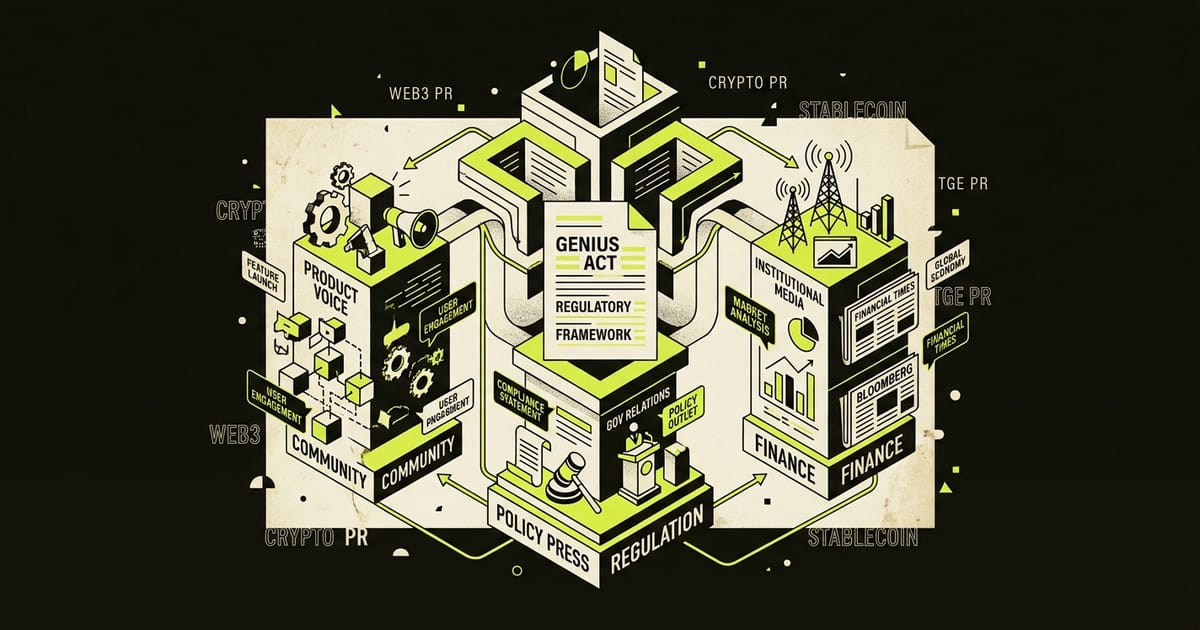
Stablecoin Issuer PR After the GENIUS Act
The GENIUS Act changed how stablecoin issuers must communicate. A three-track PR playbook: product voice, policy press and institutional media.
Read playbook →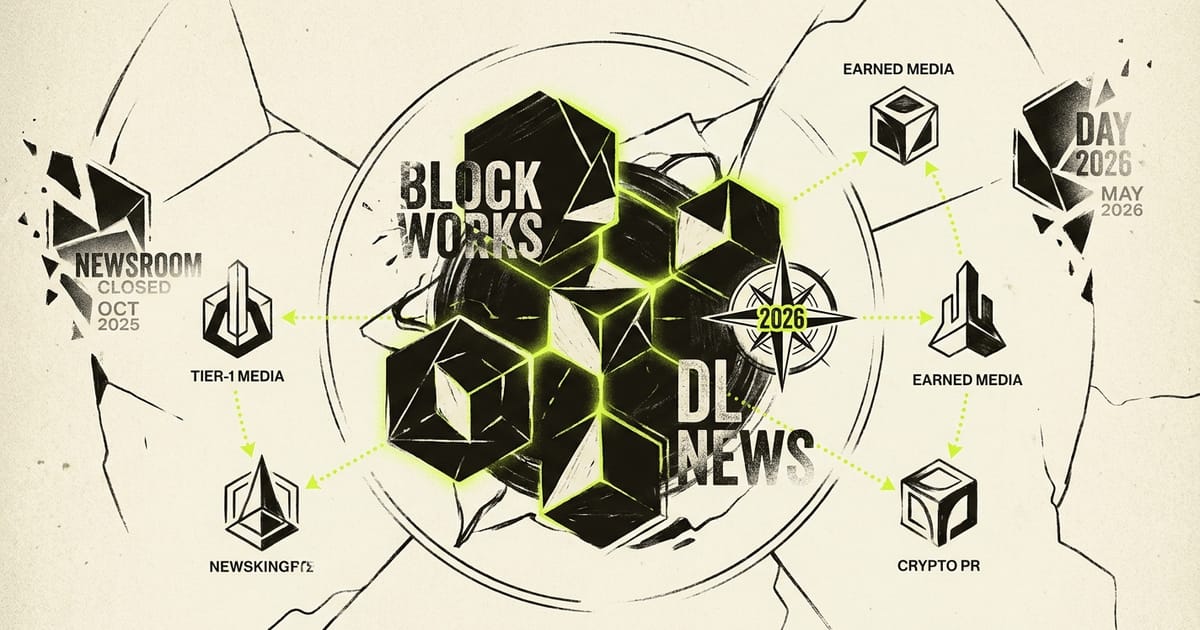
Crypto Media Map 2026: Where to Pitch After Blockworks
Blockworks shut its newsroom in Oct 2025 and DL News closed in May 2026. The updated tier-1 crypto media map and what it means for your outreach.
Read playbook →
Singapore Web3 PR: MAS DTSP, BT, and the Token2049 Cycle
After 300 DTSP applications and 37 licences, MAS compliance is paragraph one of every Singapore Web3 pitch. Outlet playbook plus a five-week Token2049 cycle.
Read playbook →
Crypto Layoff PR: Cut Staff Without Tanking Token Price
A PR playbook for Web3 founders facing a workforce reduction: sequencing, spokesperson choice, the AI pivot trap to avoid and protecting token sentiment.
Read playbook →Airdrops vs Real Users and Why Forced Onchain Activity Fails
Why incentive-forced onchain activity attracts airdrop farmers instead of real users, how to spot the difference, and what Web3 teams should do instead.
Read playbook →Crypto Conference Merch That People Wear and Keep
How to plan crypto conference merch and mascots that people use after the event, with field notes on quality, context, and what builds community.
Read playbook →Most Crypto Companies Have an Explanation Problem
Why narrative, not technology, decides which crypto projects get users and press, with chain examples and a practical way to build and repeat your own.
Read playbook →What Earned PR Is Not: Five Myths Web3 Founders Believe
Five things earned PR is not, why 'PR is dead' gets expensive fast, and how Web3 founders can tell whether their company is ready to do PR yet.
Read playbook →General vs Degen Web3 Marketing and When to Use Each
General vs degen Web3 marketing compared, with what each includes, when each fits, why community beats shilling, and how to combine both in one plan.
Read playbook →Journalists Are Not on Your Payroll: Crypto Media Relations
How crypto journalists actually work and how founders can build real relationships with them: warm intros, cold pitches, beats, follow-ups and exclusives.
Read playbook →Limitless Marketing Teardown: Market Foresight, Not Trading
My marketing teardown of Limitless: position it around foresight, not trading, with PR ideas, a conference Future Board stunt and a clear hero narrative.
Read playbook →Tangem Marketing Teardown: Sell Ownership, Not Hardware
My marketing teardown of Tangem: why its real competitor is centralized exchanges, and the campaign ideas I would run to sell ownership, not hardware.
Read playbook →What Posting on X Did for My Career and What Founders Can Copy
How posting on X led to my first client, first speaking slot and Web3 network, and the three habits founders can copy to build a personal brand there.
Read playbook →The Four-Step PR Countdown Before a Launch or Announcement
My four-step PR countdown for a launch: thought leadership, podcasts, an AMA and embargoed press outreach, plus why funding news still drives growth.
Read playbook →Why Your US Web3 Playbook Fails in India and Korea
Why a Web3 marketing playbook that worked in the US stalls in India and Korea, plus a practical way to research a new market and localise your launch.
Read playbook →TOKEN2049 Field Notes on What Works for PR and Marketing
Notes from TOKEN2049 between 2024 and 2026 on what journalists want, which events to pick, closed dinners, event spend versus return, and a working checklist.
Read playbook →What to Know Before You Hire a Web3 PR or Marketing Agency
A fractional PR consultant's field notes on hiring a Web3 agency, covering who really does the work, big vs boutique, questions to ask and KPIs to set.
Read playbook →Web3 GTM Basics for Early-Stage vs Mature Startups
A stage-by-stage Web3 growth playbook for early and mature startups, plus product-first lessons on pain points, UX, DeFi hiring and bear market spend.
Read playbook →Will AI Replace PR and Comms? What the Salaries Say
AI will not replace PR. What AI does well, what it cannot do, the comms salaries AI companies are paying, and why GEO makes earned coverage worth more.
Read playbook →The Wire Service Trap: A Press Release Is Not PR
Why paid press releases and wire distribution do not count as coverage, what they cost crypto founders in credibility, and the launch plan I use instead.
Read playbook →
AI Startup Marketing Plan: Step-by-Step Guide by Category
A 90-day AI startup marketing plan for six categories: devtools, B2B SaaS, vertical AI, infra, consumer and agents. Channels, budgets and metrics for each.
Read playbook →
The Complete Startup Marketing Checklist (Free PDF)
An 88-item startup marketing checklist across five phases: foundations, pre-launch, launch week, first 90 days and always-on. Free PDF and interactive tool.
Read playbook →
20 Marketing Channels for Startups, Ranked by Cost and Speed
All 20 startup marketing channels compared by cost to start and time to first result, with three first actions per channel and a pick-3 framework by stage.
Read playbook →
AI Startup GTM Strategy: 7 Motions That Work in 2026
Seven AI startup GTM motions compared: when each fits, cost, signals and failure modes, plus a proof density test and three worked scenarios from pre-seed to B.
Read playbook →
Free GTM Planner: Prototype Your Go-to-Market in 10 Minutes
How the free GTM planner works: five inputs, a 90-day plan, a ranked channel mix and key metrics. Includes a pressure test and three worked example outputs.
Read playbook →
How Much Should a Startup Spend on Marketing? (Free Calculator)
Typical startup marketing budgets by stage as a share of burn, the people, programs and tools split, two worked examples and a free calculator to set yours.
Read playbook →
Seed-Stage Marketing Budget Template: Every Line Item Explained
A free seed-stage marketing budget template with low, mid and high monthly amounts for every line, plus a simple way to run $1K to $3K channel tests that end.
Read playbook →
Developer Tools Marketing: The Playbook for AI Devtool Startups
How AI devtool and API startups win developers: docs as marketing, quickstarts, GitHub, Hacker News, technical content, usage-based funnels and a 90-day plan.
Read playbook →
B2B AI SaaS Marketing Strategy: From First Demo to $1M ARR
A stage-by-stage B2B AI SaaS marketing strategy: founder-led content, case studies, LinkedIn, outbound, G2, trust pages and ways to beat AI skepticism.
Read playbook →
Consumer AI App Marketing: How to Get Your First 10,000 Users
How consumer AI apps reach 10,000 users: TikTok and Shorts demos, creator deals, App Store optimization, referral loops, launches and the retention fixes.
Read playbook →
Marketing an AI Infrastructure Startup: Engineers and CFOs
AI infrastructure marketing has two buyers: the engineer and the CFO. Benchmarks, cost calculators, whitepapers, marketplaces and a 90-day plan for each one.
Read playbook →
Vertical AI Marketing: Healthcare, Legal and Fintech Playbooks
How vertical AI startups market in healthcare, legal and fintech: compliance-first messaging, trade press, key conferences, references and a claims checklist.
Read playbook →
How to Market an AI Agent Startup Without Sounding Generic
AI agent marketing that stands out: job-to-be-done positioning, proof posts, an ROI calculator, guardrails messaging and outcome pricing, with a 60-day plan.
Read playbook →
Ideal Customer Profile Worksheet for Startups (Free Template)
Free ideal customer profile template for startups: firmographics, triggers, pains, buying committee and disqualifiers, with AI devtool and vertical AI examples.
Read playbook →
Positioning Statement Template for AI Startups (With Examples)
A positioning statement template for AI startups: a five-part canvas, five worked examples, and a 10-call test to check your positioning before it goes live.
Read playbook →
Product Hunt Launch Checklist: The 4-Week Plan for AI Products
A day-by-day Product Hunt launch checklist for AI products: assets, supporter list, first comment, a 12:01am PT schedule and the follow-up most teams skip.
Read playbook →
How to Launch on Hacker News: A Show HN Guide for Founders
Show HN rules, title formats that work, when to post, how to answer comments, and how to keep your AI product alive if it hits the Hacker News front page.
Read playbook →
Your First Marketing Hire: When, Who, and What to Pay
When to hire your first marketer, which type fits your motion, fractional vs full-time, typical pay bands, interview questions and a 30-60-90 plan to agree on.
Read playbook →
SEO for Startups in 2026: A Starter Guide for the AI Search Era
An SEO starter guide for startups in 2026: technical basics, low-DR keyword research, bottom-funnel pages, link earning and a 90-day plan for AI search.
Read playbook →
GEO Checklist: How to Get Cited by ChatGPT and Perplexity
A GEO checklist for startups: entity consistency, author pages, schema, citable paragraphs, earned media and a simple way to track AI citations monthly.
Read playbook →
WhatsApp Marketing for Startups: Channels, Communities and API
WhatsApp for startups: when to use the Business app, Channels, Communities or the API, how opt-in and template pricing work, plus 5 ready message templates.
Read playbook →
Email Marketing for Early-Stage Startups: The Minimum Setup
The minimum email setup for early-stage startups: SPF, DKIM and DMARC, list building, a 5-email welcome sequence, onboarding triggers and deliverability rules.
Read playbook →
LinkedIn Ads vs Google Ads for B2B Startups: Where to Spend First
LinkedIn Ads vs Google Ads for B2B startups: intent vs targeting, typical CPC ranges, minimum test budgets, creative, tracking and a decision table for spend.
Read playbook →
Paid Ads for Startups: How to Spend Your First $1,000
A structured $1,000 paid ads test for startups: one channel, one offer, one audience, tracking, kill criteria, and Meta vs Google vs LinkedIn vs Reddit.
Read playbook →
90-Day Content Marketing Plan for an AI Startup (Template)
A week-by-week 90-day content plan for AI startups: pillar pages, comparison pages, founder POV posts, distribution and a repurposing system that compounds.
Read playbook →
Community-Led Growth: Discord, Slack or Telegram?
Discord, Slack or Telegram? A community-led growth guide for AI and Web3 startups: platform table, 30-day launch plan, rituals and the metrics that matter.
Read playbook →
Product-Led Growth for AI: Free Trial, Freemium or Reverse Trial?
Free trial, freemium or reverse trial? A product-led growth guide for AI startups with inference cost math, usage limits, upgrade prompts and a PQL scorecard.
Read playbook →
Waitlist Launch Strategy: Build a Pre-Launch List That Converts
Build a pre-launch waitlist that turns into active users: signup questions, referral boosts, a 6-email nurture plan, cohort invites and a launch-day checklist.
Read playbook →
Referral Programs for Startups: Design, Incentives and Examples
How to design a startup referral program that works: single vs double-sided rewards, B2B vs B2C incentives, reward math, in-product placement and fraud checks.
Read playbook →
Partnership Marketing: Grow Through Integrations and Marketplaces
Grow through partners: choose integrations that drive distribution, compare AWS, Azure, Google Cloud and AppExchange listings, and run joint announcements.
Read playbook →
Podcast Guesting for Founders: Book 10 Shows in 60 Days
Podcast guesting for founders, run as a pipeline: find the right shows, a pitch email template, a guest one-sheet, recording prep and a 60-day booking plan.
Read playbook →
Reddit Marketing for Startups: What Works Without Getting Banned
Reddit marketing for startups without getting banned: picking subreddits, founder account rules, AMAs, Reddit Ads, AI search citations and a do and don't list.
Read playbook →
Build in Public: A Playbook for Founders Who Hate Self-Promotion
A build in public playbook for founders who hate self-promotion: what to share and keep private, cadence, platforms, risks, and 10 ready-to-use post templates.
Read playbook →
AI Product Pricing Strategy: Seats, Usage or Outcomes?
An AI pricing strategy guide: seat vs usage vs outcome vs hybrid models, margin math with inference costs, a worked example, and pricing page anatomy for AI.
Read playbook →
SaaS Landing Page Checklist: 30 Fixes That Lift Conversion
A 30-point SaaS landing page checklist: headline clarity, proof above the fold, demo video, CTAs, security signals, speed, mobile and analytics, with examples.
Read playbook →
Early-Stage Marketing Metrics: The 12-Number Dashboard
The 12 marketing metrics an early-stage startup should track, with formulas, typical target ranges, a weekly review checklist and a copyable dashboard template.
Read playbook →
CAC, LTV and Payback Period: A Founder's Guide With Formulas
CAC, LTV and payback period explained with formulas, a full worked example, blended vs paid CAC, LTV caveats for young startups and payback targets by model.
Read playbook →
The Lean Marketing Tool Stack for Startups in 2026
A lean 2026 marketing tool stack for startups across nine functions, with free and paid options, upgrade triggers, sample stacks by stage and a sprawl audit.
Read playbook →
Press Kit Template for Startups: What Journalists Actually Use
What a startup press kit needs: boilerplate, fact sheet, bios, headshots, logos, funding facts and contact. Includes example boilerplate and an audit checklist.
Read playbook →
Press Release Template for a Startup Launch (Free Download)
An annotated press release template for startup launches, with a fictional worked example, headline formulas, distribution options and when to pitch instead.
Read playbook →
Cold Email Templates for B2B Founders: 10 That Get Replies
10 cold email templates for B2B founders: trigger-event, mutual connection, insight-led and breakup, plus deliverability guardrails and a follow-up cadence.
Read playbook →
Web3 Startup Marketing Checklist: Pre-Launch to Post-TGE
A phase-by-phase Web3 marketing checklist: community, docs, X, KOL vetting, PR, exchange listing comms, MiCA and VARA checks, and on-chain analytics to TGE.
Read playbook →
Conference Marketing on a Startup Budget: Skip the Booth
How startups get real value from conferences without a booth: pre-booked meetings, side events, dinners, speaking slots, press briefings and simple ROI math.
Read playbook →
How to Start a Startup Newsletter People Actually Open
How to start a startup newsletter: pick a format, choose Substack, beehiiv or Ghost, set a cadence, build a 12-week calendar, grow the list and use it for PR.
Read playbook →
B2B Case Study Template: Turn One Customer Win Into 10 Assets
A B2B case study template with 20 interview questions, structure, metrics, approval checklist and a plan to repurpose one win into decks, posts and PR pitches.
Read playbook →
Marketing OKRs for Startups: 15 Examples by Stage
15 marketing OKR examples for startups from pre-seed to Series B, plus a key result formula, scoring method and the vanity metrics to cut from your plan.
Read playbook →
A 30-Day Founder Content Calendar for LinkedIn and X
A free day-by-day founder content calendar for LinkedIn and X: 30 prompts, five post types, a batching system and a repurposing table. Printable PDF included.
Read playbook →
Short Video for B2B Startups: Demos, Shorts and Founder Clips
A low-budget B2B video playbook: a 90-second demo script, Shorts and LinkedIn video ideas, founder clips from podcasts, captioning rules and a 4-week plan.
Read playbook →
Startup Launch Week: A Day-by-Day Plan for Maximum Attention
Plan a startup launch week: what to ship each day, the content and press angle per day, a 6-week prep timeline, a launch checklist and the metrics to track.
Read playbook →
Go-To-Market Plan Template: The One-Page Version (Free)
A free one-page go-to-market plan template: nine sections explained, a blank copy-paste version, a filled fictional example and a GTM planner tool to start.
Read playbook →
What Does a PR Agency Actually Do for a Startup?
A plain breakdown of what a PR agency does for startups: narrative, media lists, pitching, prep, crisis and reporting, plus what it won't do and real results.
Read playbook →
PR vs Marketing for AI Startups: Which Do You Need First?
PR vs marketing for AI startups: goals, costs, timelines and a decision table that shows when earned media should lead and when demand gen should go first.
Read playbook →
When Should a Startup Hire PR? 7 Signals It's Time
Seven signals your startup is ready to hire PR, from a round closing in 4 to 8 weeks to enterprise deals stalling on trust, plus the signs it's still too early.
Read playbook →
How to Get Press Coverage for Your Startup Without an Agency
A DIY plan to get press coverage for your startup: find the angle, build a 30-name list, pitch an exclusive, follow up and time it well. Free templates inside.
Read playbook →
How to Build a Media List That Gets Responses (Free Template)
How to build a media list that gets replies: beat research, tiering, the columns to track, finding emails ethically and keeping it fresh. Free template inside.
Read playbook →
How to Pitch Journalists: Email Templates That Get Opened
How to pitch journalists by email: subject lines, a 100-word structure, six copy-ready templates (exclusive, data, reactive) and the follow-up rules that work.
Read playbook →
Press Release, Pitch or Exclusive: Which Format to Use
Press release vs exclusive vs embargoed pitch: what each earns, how embargoes fit, what wire distribution is really for, plus a decision matrix and timeline.
Read playbook →
How to Measure PR Results When You're a Startup
How to measure PR at a startup: coverage quality scores, share of voice, branded search lift, AI citations and pipeline influence, plus a one-page dashboard.
Read playbook →
Earned, Paid and Owned Media: How Startups Should Split Budget
Earned, paid and owned media explained for startups: how each compounds, the PESO model, recommended budget splits by stage and a worked seed-stage example.
Read playbook →
Your First Media Interview: A Prep Checklist for Founders
Media interview tips for first-time founders: a before, during and after checklist covering key messages, bridging, on and off the record, and numbers to share.
Read playbook →
Thought Leadership for AI Founders: Where to Start
How AI founders build real thought leadership: find a defensible point of view, pick channels, set a cadence, use ghostwriters honestly, and measure it.
Read playbook →
Why PR Now Drives Your AI Search Visibility
How ChatGPT, Perplexity and AI Overviews pick sources, why tier-1 coverage and consistent entity data get you cited, and how to track AI visibility monthly.
Read playbook →
How to Announce a Seed Round: A Checklist for Founders
Should you announce your seed round, and how? Angles beyond the number, exclusive vs wide, investor quotes, timing, hiring page prep and a full checklist.
Read playbook →
AI Product Launch PR Plan: From Embargo to Day 30
A 7-week PR plan for AI model and product launches: skeptic-proof your benchmarks, give reporters access under embargo, run launch day, and sustain to day 30.
Read playbook →
B2B SaaS PR: Which Trade Publications Matter and How to Pitch
Which publications move B2B SaaS deals: trade press vs tech press, newsletters and analysts, how to find the 20 outlets your buyer reads, and how to pitch them.
Read playbook →
Analyst Relations 101: Gartner, Forrester and IDC for Startups
What analyst relations is, when it matters for startups, briefing vs inquiry, how Cool Vendors and Waves work, smaller firms to brief, and what AR costs.
Read playbook →
25 Questions to Ask Before Hiring a PR Agency (Free Scorecard)
25 questions to ask a PR agency before you sign, grouped by team, results, process, pricing and contracts, with what good answers sound like and a scorecard.
Read playbook →
PR Agency Red Flags: 12 Warning Signs Before You Sign
12 PR agency red flags to catch before signing: guaranteed tier-1 hits, bait-and-switch teams, lock-ins, vanity reports and paid posts sold as earned coverage.
Read playbook →
Pay-for-Placement PR Explained: Sponsored vs Earned Coverage
How pay-for-placement PR works: sponsored posts, contributor networks, guaranteed placements, labelling rules, SEO and AI citation value, and when it backfires.
Read playbook →
PR Retainer vs Project vs Pay-Per-Placement: Which Model Fits?
Compare PR pricing models: retainer, project sprint and pay-per-placement. See the incentives each creates, which fits your stage, and real pricing bands.
Read playbook →
Startup Awards and Lists: Which Are Worth Your Time
Which startup awards matter, how to spot pay-to-play schemes, when to nominate for Forbes 30 Under 30, and how to turn a win into pipeline. Scorecard included.
Read playbook →
Podcast PR for AI Founders: The Shows, The Pitch, The Payoff
How AI founders get booked on the right podcasts: three show tiers, a pitch template, a prep checklist, clipping, AI search payoff and a 6-week tour plan.
Read playbook →
AI Startup Crisis Comms: Hallucinations, Breaches, Bad Press
A crisis plan for AI startups: five crisis types, an hour-by-hour first 6 hours, holding statement templates, what not to say, and a pre-crisis checklist.
Read playbook →
Expanding to APAC: A PR Guide for AI Startups
How AI startups earn press in India, Singapore, Japan, Korea and the UAE: what reporters want, localization, partners, events and a 6-week launch timeline.
Read playbook →
B2B Influencer Marketing for AI and Devtool Startups
How AI and devtool startups use LinkedIn creators, dev YouTubers and newsletters: vetting checklist, brief template, FTC disclosure, launch waves and metrics.
Read playbook →
Fractional PR for AI Startups: How It Works and What It Costs
Fractional PR for AI startups explained: scope, weekly cadence, $5K to $12K retainers, $15K to $40K launch sprints, the Gaia proof point and who it fits.
Read playbook →
Fractional Head of PR vs Agency vs In-House: Cost Compared
Fractional head of PR vs agency vs in-house: cost, seniority, speed and lock-in compared, with a worked 12-month example and a scorecard to pick a model.
Read playbook →
AI Startup PR Pricing: Exactly What You Get at Each Budget
AI startup PR pricing broken down: what $5K, $12K, a $15K to $40K launch sprint and a founder profiling sprint include, what's excluded and how to choose.
Read playbook →
Why Web3 and AI Founders Hire Shilika Jain
Why Web3 and AI founders hire Shilika Jain: six years of tier-1 placements, 50+ protocols, an APAC footprint and six campaigns from Gaia to MANTRA Chain.
Read playbook →
What Happens on a 30-Minute PR Teardown Call
What happens on a 30-minute PR teardown: what to send beforehand, the questions asked, and what you leave with, from angle to outlet shortlist to launch timing.
Read playbook →
The First 90 Days of a Fractional PR Engagement, Week by Week
What happens in the first 90 days of a fractional PR engagement: narrative audit, messaging, media map, first pitches, founder profiling, launch, reporting.
Read playbook →
Funding Announcement PR: The Launch Sprint Service Explained
How a funding announcement PR sprint works: $15K to $40K over 4 to 8 weeks, from angle to exclusive to lift day, with the MANTRA and Bullieverse exclusives.
Read playbook →
Token Launch PR Service: What's Included From Pre-TGE to Listing
Token launch PR from pre-TGE to listing: retainer, TGE sprint and 90-day tail pricing, exchange comms, three KOL waves, compliance and the RARI Chain proof.
Read playbook →
APAC PR Service: Launching in Korea, Japan, India and Singapore
APAC PR for Web3 and AI founders: quarterly retainer or 14 to 21 day single-market sprint, native outlets, regional KOLs and events in Korea, Japan and India.
Read playbook →
KOL Marketing Service: 200+ Vetted Creators, Three-Wave Launches
A Web3 KOL marketing service with 200+ vetted creators, three-wave launches, fraud audits, FTC and SEC-aware briefs and on-chain cost per wallet tracking.
Read playbook →
Founder Profiling Service: Op-Eds, Podcasts and Speaking
A founder profiling service for Web3, AI and security CEOs: op-eds, podcasts and speaking slots. Pricing, the 90-day sprint plan, proof, and who it fits.
Read playbook →
Op-Ed of the Month: Ghostwritten Tier-1 Bylines for $2,500
Op-ed ghostwriting for founders: one placed tier-1 byline a month for $2,500, 3-month minimum. The outlets, the monthly process, and who it is right for.
Read playbook →
Whitepaper Sprint: A Launch-Ready Whitepaper in 4 Weeks
A whitepaper writing service for Web3 and AI teams: 8,000 to 15,000 words in 4 weeks for $9,500, with technical interviews, citations and a launch plan.
Read playbook →
Founder Essay Package: One Tier-1 Essay in Your Voice
Founder essay ghostwriting for $3,500: one 1,200 to 1,800 word essay in your voice, placed in a tier-1 contributor outlet, with two interviews and two edits.
Read playbook →
Cybersecurity PR Service: Analyst Relations and Security Press
A fractional cybersecurity PR service: analyst relations, Dark Reading and SC Media coverage, disclosure comms and AEO for $5K to $12K a month. See the scope.
Read playbook →
AI Search Visibility Service: Get Cited by ChatGPT
An AI search visibility service bundled with PR: entity fixes, founder pages, tier-1 coverage as citation fuel and weekly ChatGPT and Perplexity tracking.
Read playbook →
Six PR Campaigns, One Pattern: Gaia, RARI, MANTRA and More
Six PR case studies from Gaia, RARI Chain, MANTRA, Fluence, Web3Auth and Bullieverse, and the one pattern behind their tier-1 coverage: category over features.
Read playbook →
PR for Startups on a Small Budget: What $2,500 to $5K Buys
Affordable PR for startups, priced honestly: what $2,500 to $5,000 a month buys, what to do yourself, and when to wait or save for a launch sprint instead.
Read playbook →
Series A PR Program: Turn Your Raise Into a Category Position
A Series A PR program in two phases: an announcement sprint that reframes the raise, then a retainer for founder voice, hiring brand and enterprise trust.
Read playbook →
Web3 PR Campaigns: What a Fractional Engagement Delivers
Web3 PR service explained: retainer at $5K to $12K a month, launch sprints at $15K to $40K, what's included, the process, and proof from RARI, Fluence, MANTRA.
Read playbook →
PR for AI Infrastructure Companies: Journalist Map and Offer
PR for AI infrastructure startups: the Forbes, The Information, Decrypt and TechCrunch map, a benchmark checklist, and a $5K to $12K a month fractional offer.
Read playbook →
Who Fractional PR Is Not For (An Honest Fit Check)
Five honest reasons fractional PR is wrong for you, from no news to wanting guaranteed tier-1 hits, plus a 10-point fit checklist to score yourself in minutes.
Read playbook →
Switching From a PR Agency to Fractional PR, Cleanly
How to switch from a PR agency to fractional PR without a coverage gap: contract exit, a notice template, an asset handover checklist and a 6-week transition.
Read playbook →
Dubai and MENA PR Service for Web3 and AI Companies
Dubai and MENA PR for Web3 and AI: VARA, ADGM and RAK DAO framing, regional exclusives, Cointelegraph Arabic, and a $12K to $35K single-market launch sprint.
Read playbook →
Fractional PR FAQ: 30 Questions Founders Ask Before Hiring
30 direct answers on fractional PR: pricing from $5K a month, contracts, guarantees, timelines, reporting, conflicts and regions. Read before you hire anyone.
Read playbook →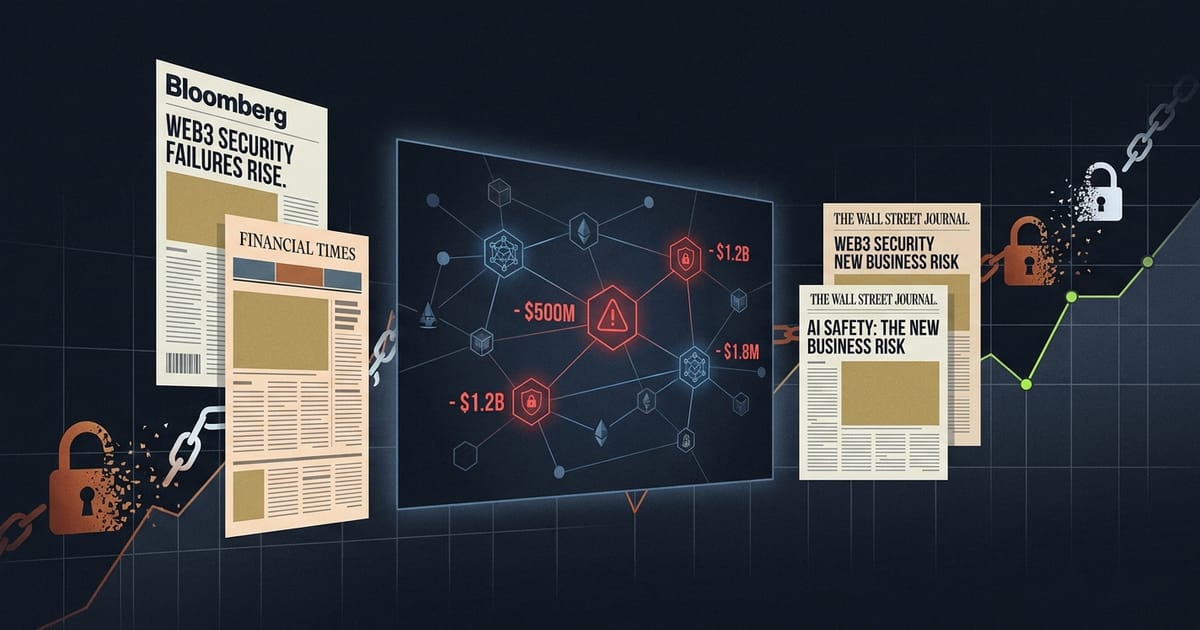
Pitching Web3 Security and AI Safety Stories to Bloomberg, FT and WSJ in 2026
Bloomberg, FT, and WSJ want Web3 security and AI safety stories, but founders keep pitching them wrong. Here's the reframe that actually lands tier-1 coverage.
Read playbook →
Founder-Led LinkedIn for Web3 and AI Builders: The 2026 Algorithm-Proof
LinkedIn's March 2026 algorithm update broke most founder content strategies. The Web3/AI operating system: profile, formats, cadence and AI-citation strategy.
Read playbook →
Cybersecurity Startup PR: How Web3 Security Firms Get Into Wired, MIT Tech
Smart contract auditors, forensics firms and bug-bounty platforms have unique PR problems. The earned-media playbook that builds institutional credibility.
Read playbook →
Web3 Protocol Post-Hack Trust Recovery: The 90-Day Communications Playbook
After an exploit, most protocols fail from bad communications, not the hack. The 90-day PR playbook that turns skeptics into long-term holders.
Read playbook →
Which Journalists Accept Crypto News Under Embargo (And How to Approach Them)
How to spot crypto and Web3 reporters who honour embargoes, plus the consent-first pitch sequence that protects your TGE, funding or protocol launch.
Read playbook →
Crisis Comms Long-Tails for Web3 Founders: Scenarios Nobody Plans For
Most Web3 crisis plans cover hacks and regulatory letters but miss the slow-burn secondary scenarios that quietly destroy reputation. The full long-tail map.
Read playbook →
Crypto News Embargo Coordination Services: What They Are and What They Actually
What a professional crypto embargo coordination service does, when you need one, and why getting it wrong is among the costliest Web3 PR mistakes.
Read playbook →
What Does a Good Embargo Strategy Look Like for Crypto Announcements?
A framework for crypto founders on embargo strategies that drive coordinated coverage, protect journalist relationships and avoid Web3-specific pitfalls.
Read playbook →
What Are the Risks of Embargo Breaks in Cryptocurrency PR?
Embargo breaks in crypto PR crater journalist trust, scramble token launch timing and can invite regulatory scrutiny. How to protect yourself.
Read playbook →
When Should You Lift the Embargo on a DeFi Protocol Announcement?
The embargo timing playbook for DeFi founders: on-chain leak risks, journalist lead times, market hours and the five scenarios that force an early lift.
Read playbook →
Web3 PR Embargo Strategy: The Operational Long-Tails Founders Never See Coming
Embargo strategy doesn't end at "don't publish before X date." The operational long-tails that derail Web3 launches, and how to manage them.
Read playbook →
How to Turn a Web3 Conference Appearance Into 30 Days of Earned Media
Most Web3 founders waste 90% of a conference appearance's PR value. The post-event sequence to mine a talk for angles, follow up and fuel a month of coverage.
Read playbook →
Web3 Founder Substack Strategy: How to Build a Newsletter That Journalists
Web3 founders are bypassing intermediaries with Substack: newsletters that become sources journalists cite, signals VCs forward and community anchors.
Read playbook →
How to Pitch Naavik, Blockworks Research, and The Block's Research Desk: A Web3
Institutional capital reads analysts and newsletters most Web3 founders ignore. How to earn coverage in Naavik, Blockworks Research and The Block.
Read playbook →
Web3 Gaming PR: How to Pitch Decrypt, Polygon Blog, and Gaming-Native Outlets
Gaming journalists at Decrypt, Naavik and Delphi Digital reject most GameFi pitches on first read. An outlet-by-outlet guide to what earns coverage in 2026.
Read playbook →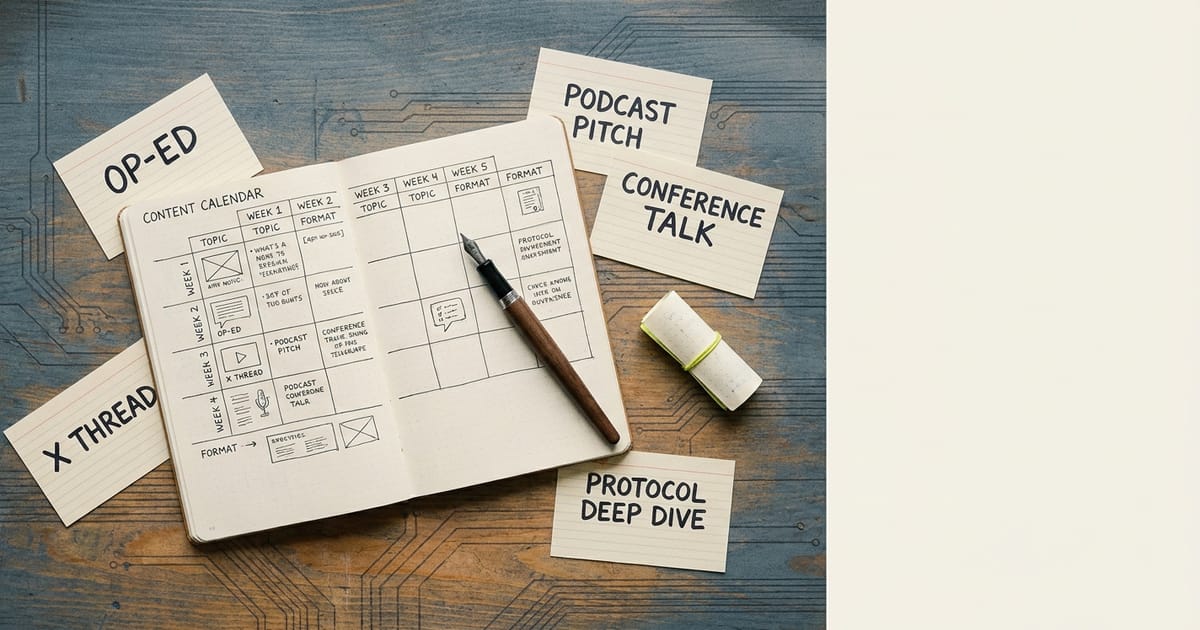
Web3 Founder Thought Leadership Without a Ghostwriter: A DIY Framework
A content extraction framework for technical Web3 founders to turn protocol expertise into bylines, X threads, podcast pitches and talks, no ghost-writer.
Read playbook →
DAOs and Decentralized Governance: The PR Playbook for When There Is No Single
No CEO, no press office, votes that reverse overnight. DAO communications is the hardest PR problem in Web3. Here is the framework that actually works.
Read playbook →
Crypto Founder LinkedIn PR: The 90-Day Operating System for Institutional
Most Web3 founders ignore LinkedIn or turn it into a price ticker. The 90-day content system that builds institutional credibility and inbound media.
Read playbook →
How to Get a Speaking Slot at TOKEN2049, ETHDenver, and Consensus: The PR
Most Web3 founders treat speaker applications as cold submissions. How TOKEN2049, ETHDenver and Consensus pick speakers, and how to earn a slot before applying.
Read playbook →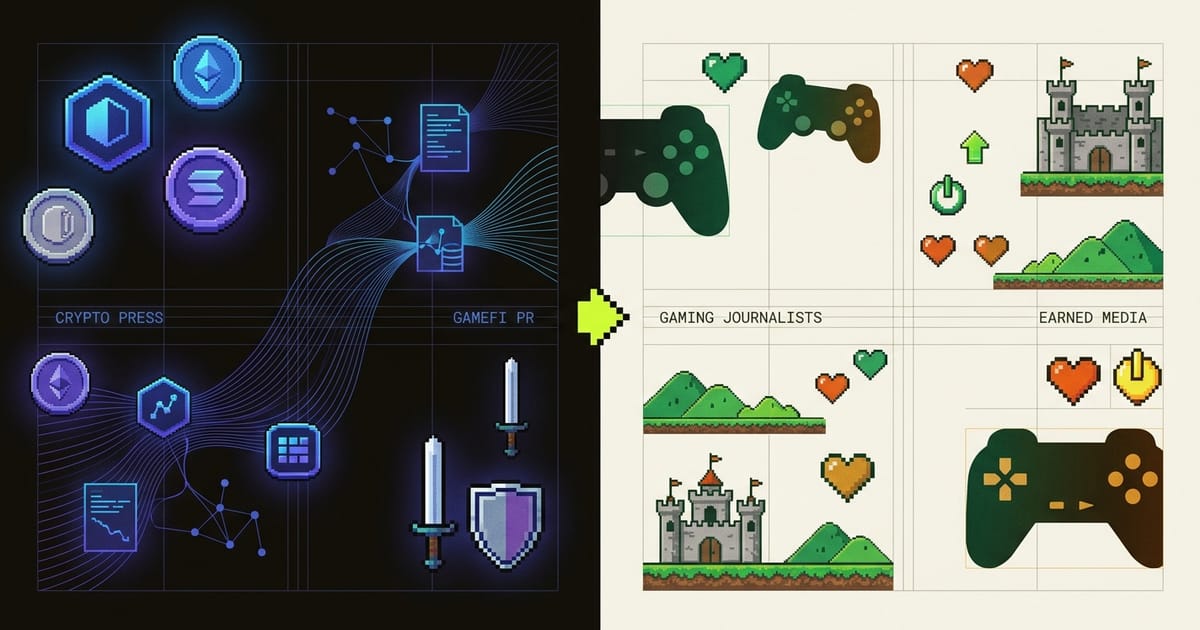
Web3 Gaming PR Playbook: Earning Coverage in Decrypt, Naavik and Gaming Press
GameFi founders face a split media landscape. How to craft two parallel narratives, one for crypto press and one for gaming journalists, and pitch both.
Read playbook →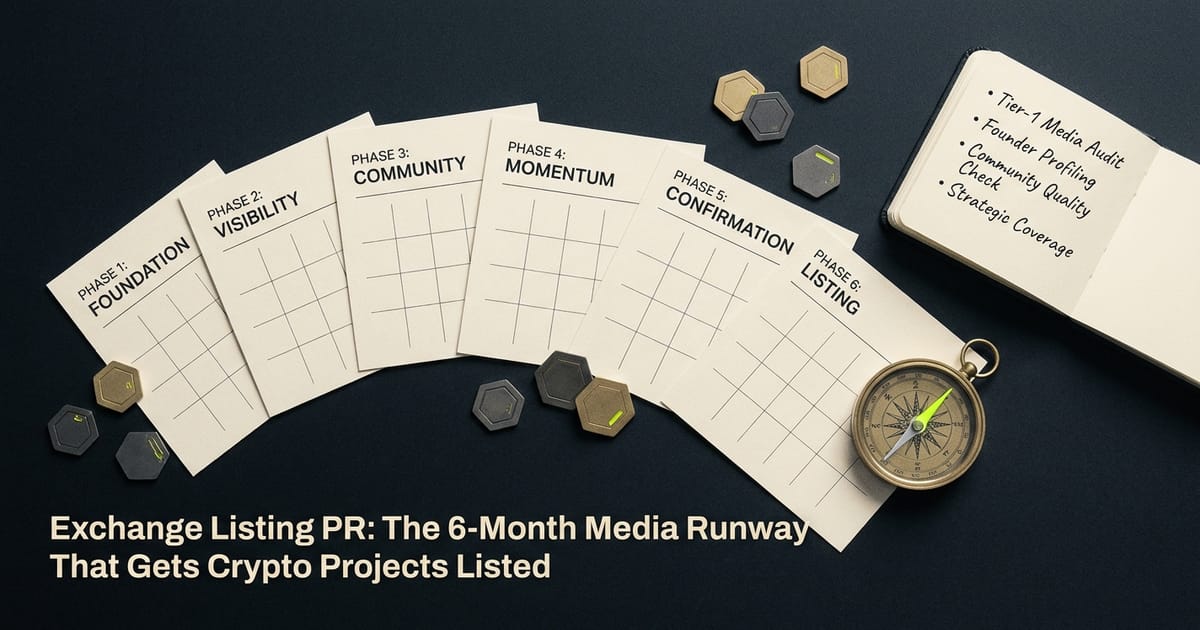
Exchange Listing PR: The 6-Month Media Runway That Gets Crypto Projects Listed
Tier-1 exchanges audit your media presence, founder visibility and community before approving a listing. The phased PR playbook that builds that coverage.
Read playbook →
How to Build a Web3 Investor Relations Program Without an In-House IR Team
Institutional allocators want structured disclosure before writing checks. How seed-to-Series B Web3 founders build an IR program with fractional PR.
Read playbook →
Newsjacking for Web3 Founders: Turn Regulatory Headlines Into Tier-1 Media
How to track SEC, CFTC, MiCA and GENIUS Act news, draft a journalist-ready comment in 30 minutes, and become a standing expert source for inbound queries.
Read playbook →
KOL vs. Earned PR in Crypto: How to Allocate Your Communications Budget in 2026
KOL spend takes 40–60% of crypto marketing budgets, but earned PR builds the institutional credibility and AI citation authority influencers can't.
Read playbook →
Token2049 Singapore PR Playbook: Before, During and After
Token2049 Singapore packs crypto and mainstream press into one venue for 48 hours. The 6-week pre-event sequence, on-site access and post-event follow-up.
Read playbook →
Web3 GameFi PR Playbook: How to Pitch Decrypt, IGN, and Polygon in the Same Week
GameFi founders face a dual audience: crypto press wants on-chain metrics, gaming press wants player experience. How to map both worlds and pitch both.
Read playbook →
How to Use Original Research and On-Chain Data to Land Tier-1 Crypto Coverage
CoinDesk, The Block and Blockworks want data-backed stories, and on-chain transparency gives Web3 a PR advantage no Web2 startup has. How to use it.
Read playbook →
The Web3 Conference PR Playbook: TOKEN2049, Consensus, and ETHDenver Into
Founders spend $20–50K at tier-1 conferences and leave with no earned media. The PR system to turn TOKEN2049, Consensus and ETHDenver into narrative capital.
Read playbook →
Crypto Token Unlock PR: How to Communicate Vesting Cliffs and Supply Events
Token unlocks are high-stakes IR moments. Most teams go silent or post a terse on-chain update: both erode holder trust. Here's the full communications sequence.
Read playbook →
Crypto Exchange Listing PR: The 4-Phase Sequence That Builds Market Confidence
Most founders treat an exchange listing as one press release. The four-phase PR sequence: context seeding, visibility, announcement day and post-listing press.
Read playbook →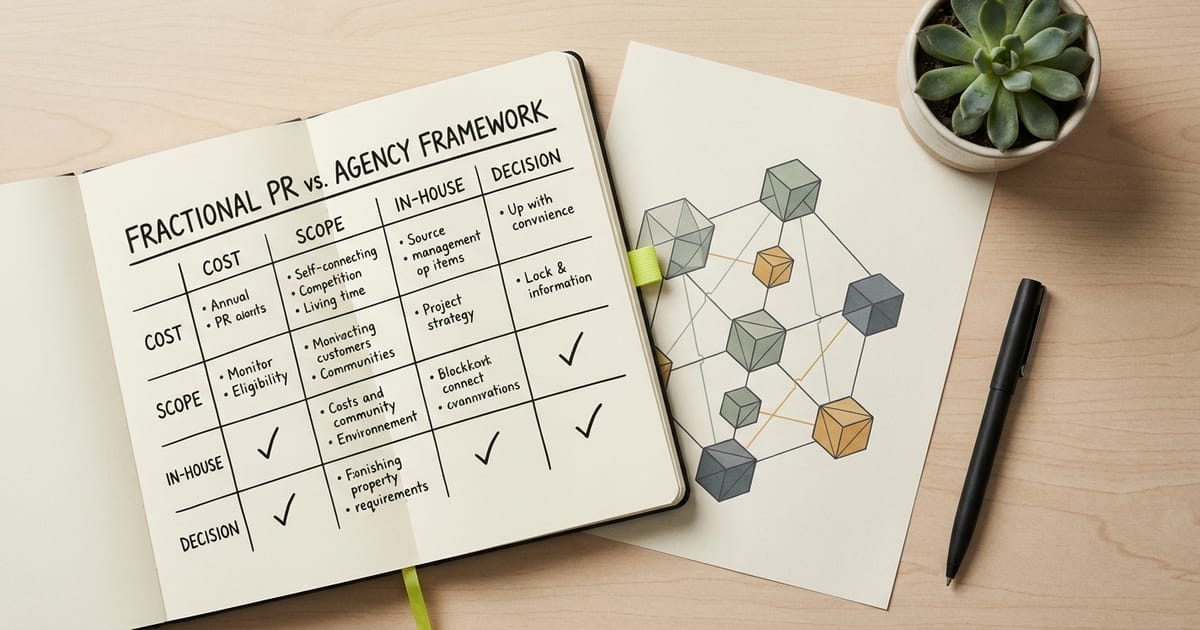
Fractional PR for Web3 Startups: Cost, Scope, and When to Hire vs. Agency
Fractional PR for crypto startups: what it costs, what it covers, what stays in-house, and how to choose between fractional and a full-service agency.
Read playbook →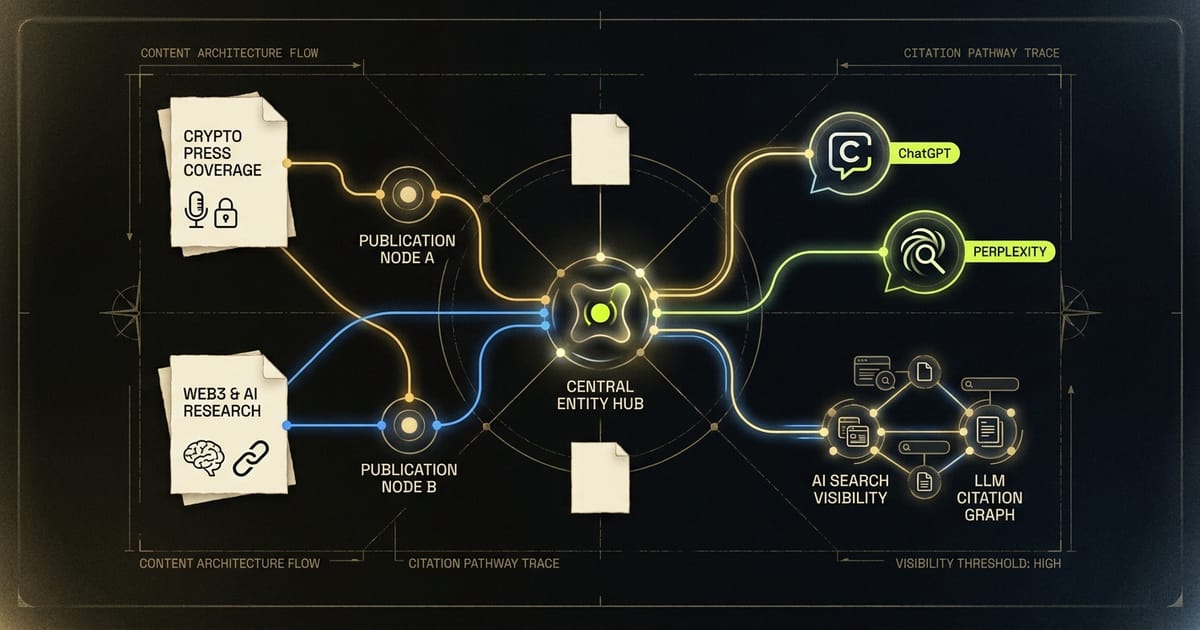
How to Build an LLM Citation Footprint as a Web3 or AI Founder
Crypto press coverage no longer guarantees citation in AI answers. The content architecture Web3 and AI founders need to get quoted in ChatGPT and Perplexity.
Read playbook →
Vulnerability Disclosure PR for Web3 and Crypto Security Projects: The CVE
A disclosure comms workflow for crypto security vendors and DeFi protocols, from pre-disclosure stakeholder sequencing to post-disclosure narrative recovery.
Read playbook →
How to Turn a Web3 Funding Announcement Into a 30-Day Earned Media Campaign
Most Web3 founders fire one press release and watch the story die in 24 hours. The 30-day arc: pre-brief, embargo lift, wave-two pitches and bylines.
Read playbook →
Cybersecurity Startup PR: Dark Reading, The Record and BleepingComputer
Security journalists follow different rules. A guide to the cybersecurity media landscape for seed-to-Series A founders who want coverage without a PR budget.
Read playbook →
Web3 Founder Ghostwriting: Bylined Op-Eds in CoinDesk, Decrypt and Forbes
Most crypto founders never land tier-1 bylines because their drafts read like agency copy. The end-to-end ghostwriting-to-placement workflow that works.
Read playbook →
How to Build a Crypto Journalist CRM: Beats, Sentiment, and Embargo Reliability
Most Web3 teams keep journalist contacts in a Google Sheet that goes stale in 60 days. The schema and workflow for a CRM that works when a story breaks.
Read playbook →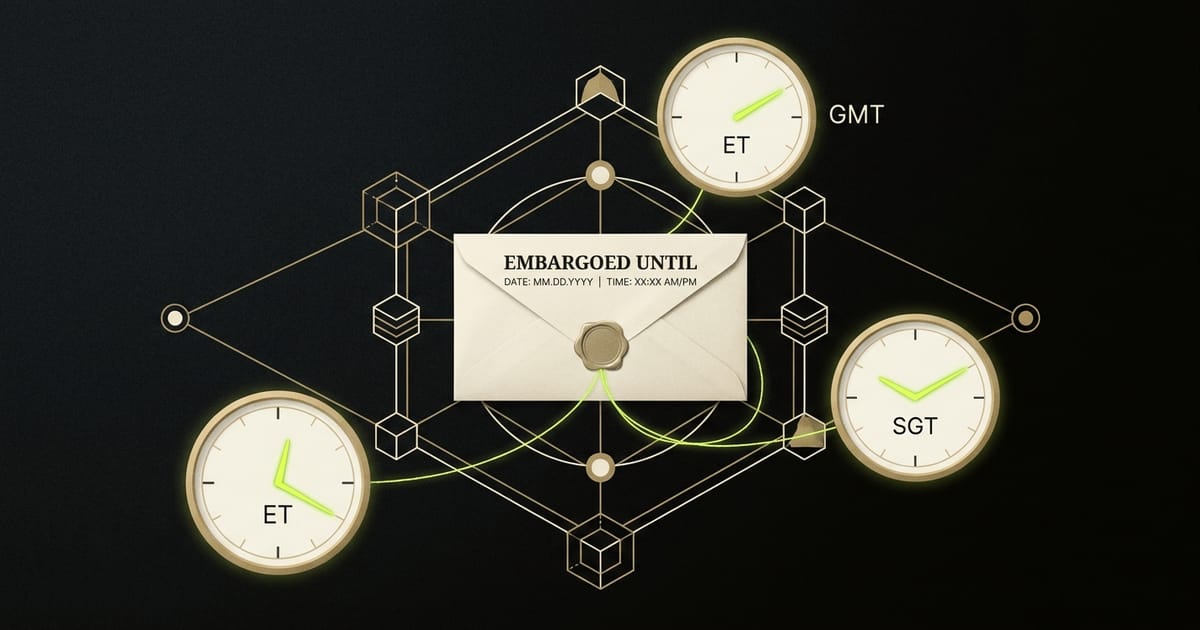
How to Coordinate Embargoed Press Releases for Blockchain Funding Rounds
How to coordinate embargoed press releases for blockchain funding announcements: timing, journalist selection, legal compliance and lift-day execution.
Read playbook →
Embargo Timing in Web3 PR: The Founder's Playbook for 2026
Embargo timing for Web3 PR: how long to hold, who to brief first, when to go simultaneous vs exclusive, and how to stop on-chain leaks killing your story.
Read playbook →
Pre-Launch Media Footprint: The Series A Investor PR Playbook for Web3 and AI
The investor-facing PR playbook for Web3 and AI founders: a 12-month earned media plan that builds the press logos, quotes and authority signals VCs look for.
Read playbook →
GameFi and NFT PR in 2026: How to Earn Media Coverage When Journalists Are
The 2021 GameFi PR playbook is now a liability. A utility-first earned media strategy for gaming and NFT founders who want tier-1 coverage without the hype.
Read playbook →
Original Research as a PR Asset: A Data Pitch Guide for Web3 and AI Founders
Proprietary surveys and on-chain reports are a founder's strongest PR assets. How to design, pitch, embargo and repurpose data for six months of coverage.
Read playbook →
Token Unlock PR: How to Communicate Vesting Cliffs Before the Community Panics
Token unlocks are predictable crises, yet few projects have a comms plan. A 30-day narrative framework that reframes supply events as protocol health signals.
Read playbook →
Web3 Founder Ghostwriting: Build Thought Leadership on LinkedIn and X Without
Most crypto founders either post sporadically or outsource to agencies that don't know tokenomics. Here's the four-pillar ghostwriting framework built for Web3.
Read playbook →
AI Agentic Infrastructure PR: Speaking to Developers, Investors and Regulators
On-chain agent frameworks, decentralized compute and LLM coordination protocols need three PR tracks at once. How to run them without contradicting yourself.
Read playbook →
How to Measure Web3 PR ROI: The Metrics Framework Founders and Boards Actually
Impressions and placements no longer cut it. An outcomes-based Web3 PR measurement framework: AI citation rate, source-filing, investor mentions and TVL lift.
Read playbook →
Press Release Blindness in Web3: What Founders Should Do Instead in 2026
Cointelegraph's head of PR flagged press-release blindness in May 2026. Why wire-only distribution fails, and the narrative-led strategy that compounds.
Read playbook →
Web3 Founder X/Twitter Strategy: The 12-Month Thought Leadership Operating
A week-by-week X content plan for Web3 founders: ownable thesis, compounding formats, journalist relationships and milestone-synced cadence, no social team.
Read playbook →
Crypto Founder Media Training: How to Survive a Tier-1 Interview Without Losing
Most crypto founders can pitch VCs but fall apart on Bloomberg or Unchained. Reporter dossiers, message architecture, bridging and crypto-specific traps.
Read playbook →
DAO Crisis Communications: How to Respond When Governance Goes Public and Token
A playbook for DAO founders in governance crises: who speaks first, what the opening statement must say, and how to cover Discord, X and governance forums.
Read playbook →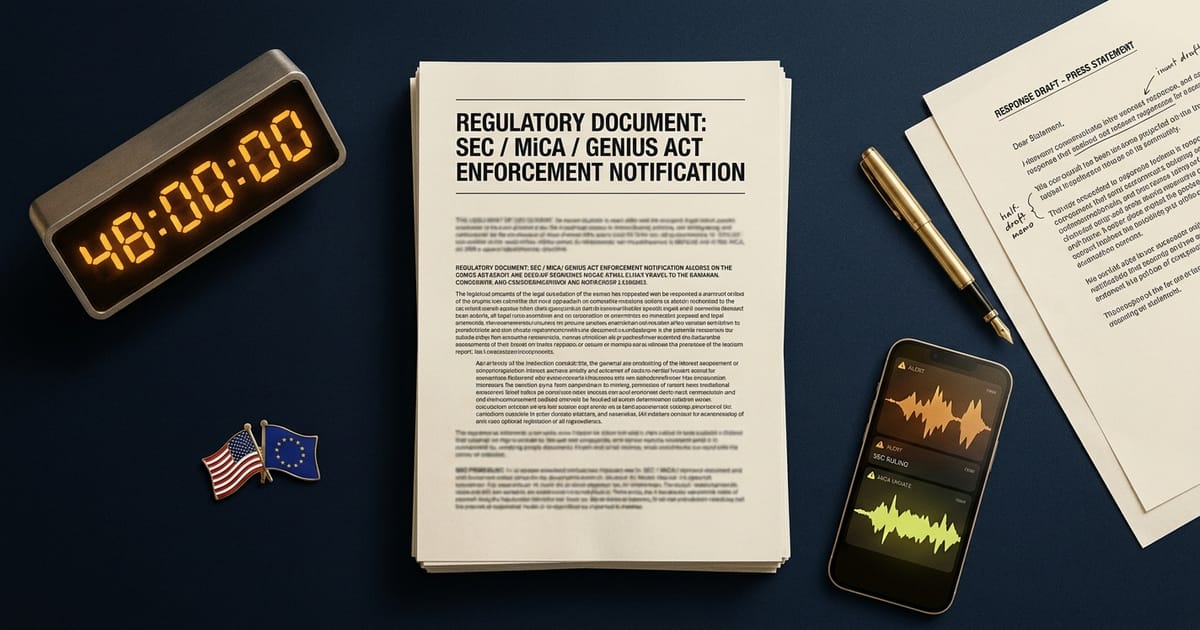
Regulatory Announcement PR: Responding to SEC, MiCA and GENIUS Act News
Every SEC ruling, MiCA date and GENIUS Act update opens a 48-hour window to become an expert source or be defined by others. The tactical playbook.
Read playbook →
TGE Comms Compliance in 2026: MiCA, the GENIUS Act and SEC/CFTC Guidance
Every press release, X thread and deck in a token launch now carries securities law exposure. How to build compliant TGE comms that still win tier-1 press.
Read playbook →
Crypto Presale PR: The 90-Day Communications Plan for Structured Token Sales
Most presale guides ignore the PR and AI-citation layer that separates durable investor credibility from day-one sell pressure. The 90-day operational playbook.
Read playbook →
How to Become a Quoted Expert Source in Bloomberg, FT, and WSJ as a Web3 or AI
A 90-day playbook for Web3 and AI founders to get quoted in Bloomberg, the FT and WSJ by understanding how financial reporters source expert commentary.
Read playbook →
DeFi Protocol PR Playbook: Build Earned Media That Moves TVL, Not Just
DeFi PR built for impressions rarely moves TVL. On-chain press hooks, institutional briefings, compliant messaging and exploit comms that grow your protocol.
Read playbook →
Stablecoin and RWA PR: Positioning a Tokenization Project for Bloomberg and FT
Most RWA and stablecoin projects default to crypto press and miss the institutional audience that moves capital. How to pitch Bloomberg, FT and WSJ.
Read playbook →
AI x Crypto PR: Pitching Agentic Web3 Projects to Crypto and Mainstream Press
Agentic Web3 founders face a dual-audience problem. Crypto vs AI editorial priorities, one bridging narrative and a pitching sequence from CoinDesk to Wired.
Read playbook →
L1 and L2 Blockchain PR Playbook: How to Differentiate Your Chain in a Crowded
Dozens of chains launch monthly on near-identical scalability claims, so narrative differentiation is the main PR challenge. A playbook for L1 and L2 teams.
Read playbook →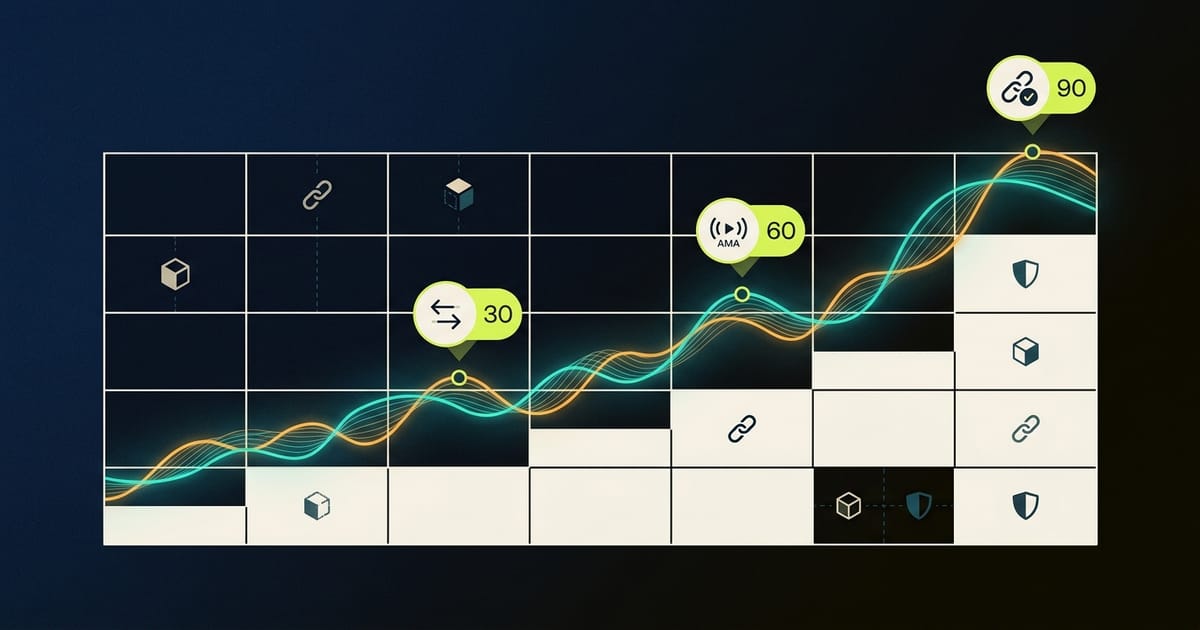
Post-TGE PR: The 90-Day Communications Plan After Your Token Goes Live
Most PR guides stop at launch day. A 90-day post-TGE plan: exchange listings, on-chain storytelling, founder AMAs, governance messaging and earned media.
Read playbook →
Web3 Founder Personal Brand PR in 2026: LinkedIn, X and Tier-1 Press
Personal branding isn't vanity for Web3 founders. It shortens fundraising cycles, attracts talent and earns journalist callbacks. The 12-month operating system.
Read playbook →
Crypto Founder Narrative Positioning: How to Pick the One Story That Lands
Most Web3 founders pitch five narratives at once and land none. A five-part framework for picking the one story CoinDesk or The Block will run, plus teardowns.
Read playbook →
DePIN PR Playbook: How to Position a Decentralized Infrastructure Network
DePIN founders face a three-audience PR problem most token launches ignore. The messaging architecture, outlet map and metric-driven hooks that cut through.
Read playbook →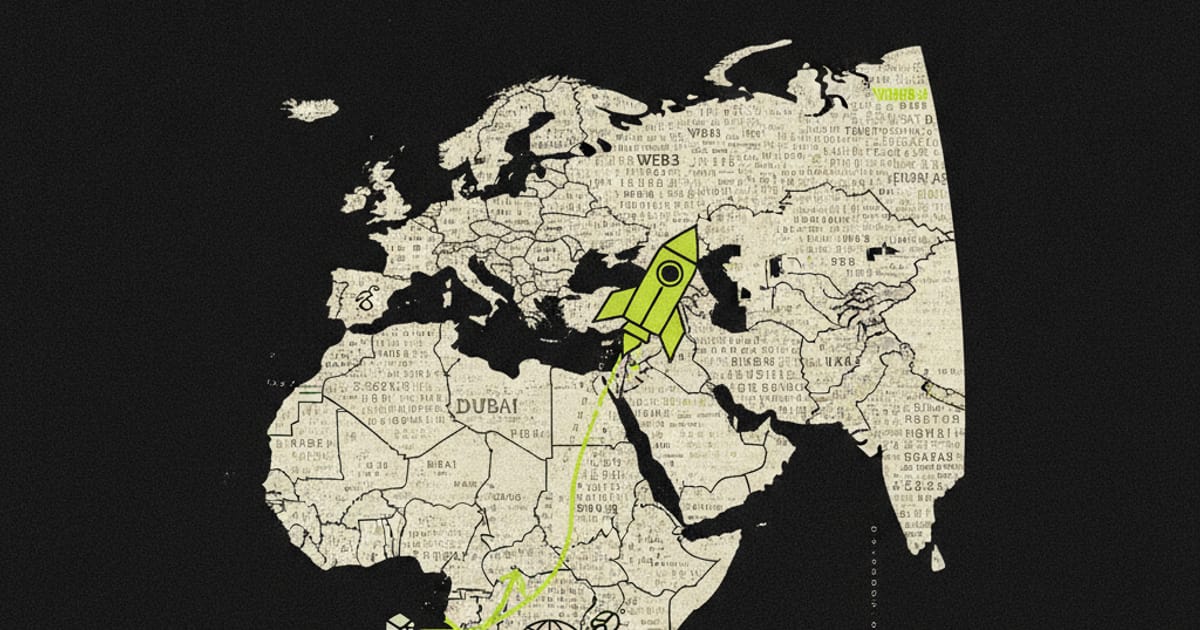
MENA Crypto PR Playbook: UAE, Saudi, and the Token2049 Dubai Press Cycle
Founders moving to Dubai or Riyadh need a MENA PR plan, not a recycled NYC one: the press tier list, VARA-aligned messaging and the Token2049 Dubai press cycle.
Read playbook →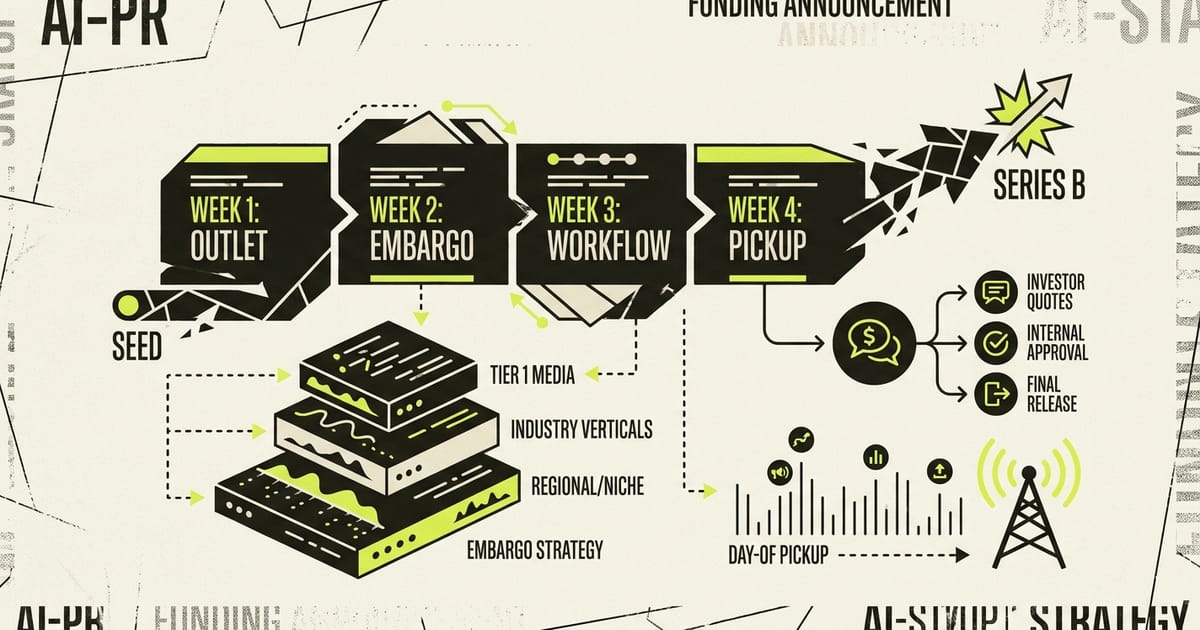
AI Startup Funding Announcement PR: The 4-Week Plan for Seed Through Series B
Most AI funding pitches land wrong. A 4-week plan: outlet selection, embargo tiers, investor quote workflow and the day-of pickup sequence, Seed to Series B.
Read playbook →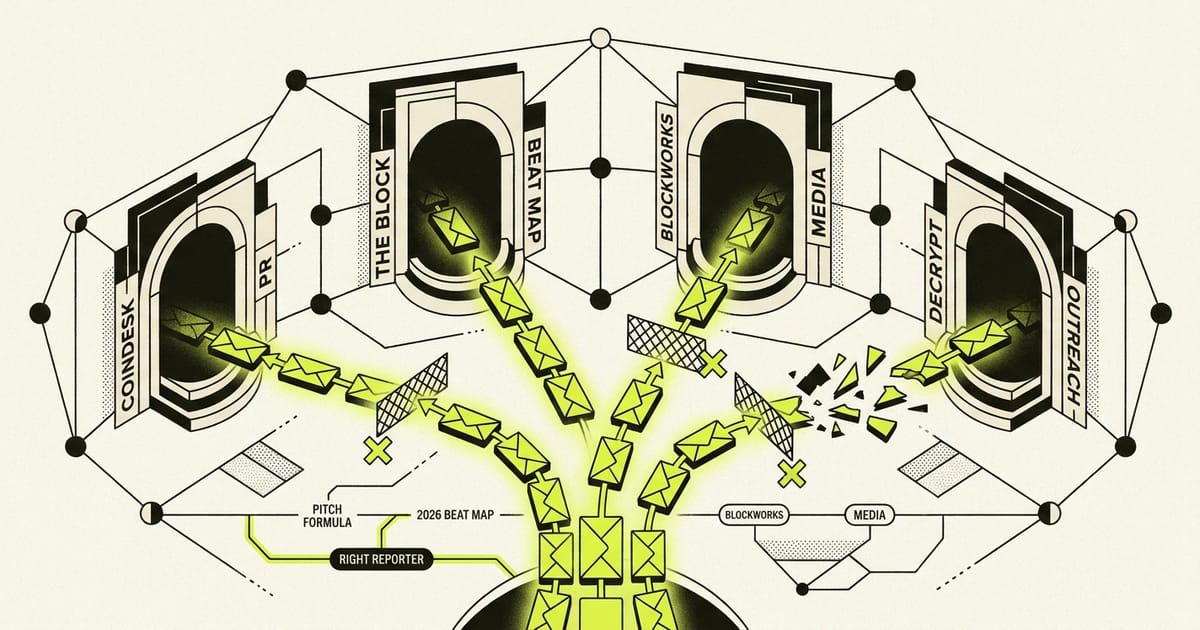
How to Pitch CoinDesk, The Block, Blockworks and Decrypt in 2026
Beat map and pitch formula for CoinDesk, The Block and Decrypt in 2026, plus what to pitch Blockworks now that its news desk is closed.
Read playbook →
How to Manage Multiple Outlet Embargoes for a Token Launch
Simultaneous embargoes across 10+ crypto outlets for your TGE are among the riskiest operations in Web3 PR. The tactical playbook to keep control.
Read playbook →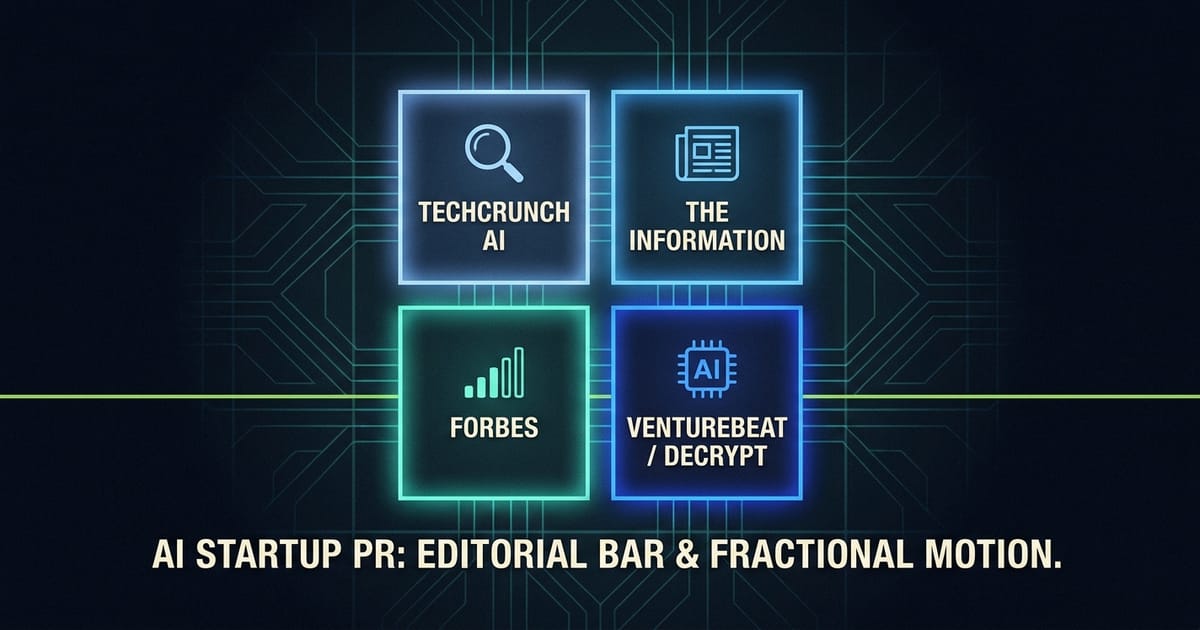
AI Startup PR: Get Covered in TechCrunch, The Information & Forbes
The editorial bar at TechCrunch AI, The Information, Forbes, VentureBeat and Decrypt's AI desk: what each takes, what it rejects, and how to run it.
Read playbook →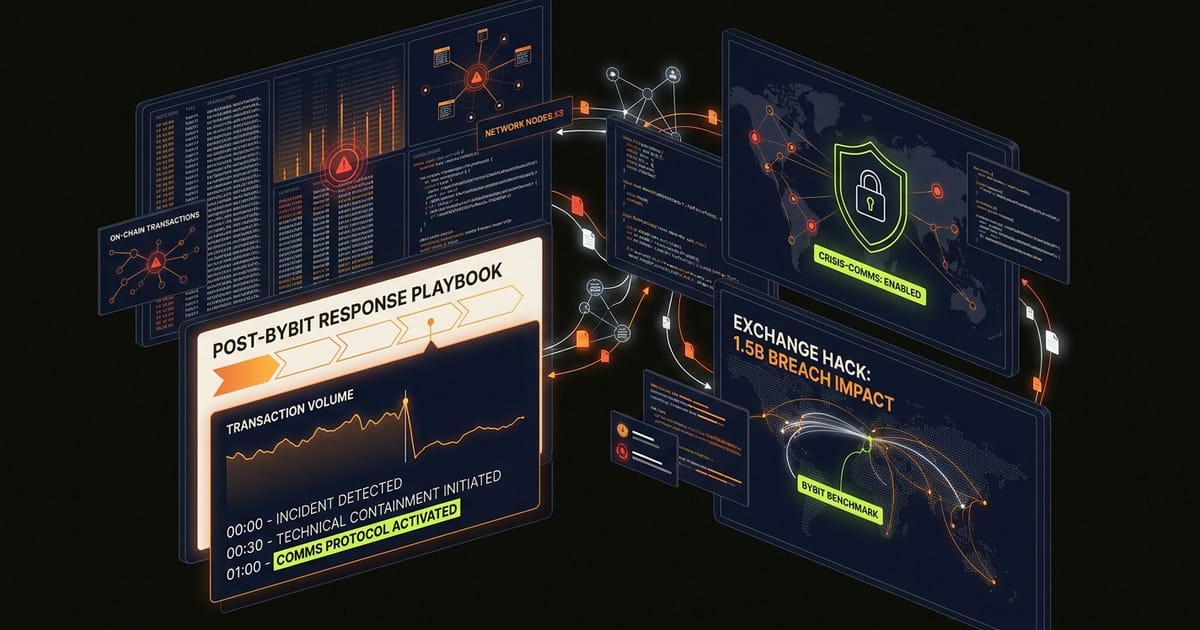
Crypto Exchange Hack Communications: The First 6 Hours Playbook (Post-Bybit)
After the $1.5B Bybit breach reset the benchmark for exchange hack response, every CEX needs a comms plan alongside containment. The minute-by-minute playbook.
Read playbook →
Rug Pull Allegations: The 72-Hour Crisis Communications Playbook for Web3
Accused of a rug pull? The first 72 hours decide survival. The holding statement, on-chain proof bundle and channel sequencing you need, with templates.
Read playbook →
How to Earn Tier-1 Crypto Coverage Without Paying for Placement: The Readiness
Most crypto founders pitch before they're ready. A 3-gap audit of story angle, journalist relationships and third-party credibility before your first email.
Read playbook →
What a Web3 PR Retainer Should Actually Include in 2026 (Line-Item Breakdown)
Agency pricing pages give a band, never line items. A real scope-of-work template for Web3 PR retainers, and how fractional compares to a $20K agency.
Read playbook →
AI Search Visibility for Web3 Founders: Getting Cited in ChatGPT and Perplexity
The operator playbook for Web3 founders: how GEO (Generative Engine Optimization) works, how it differs from SEO, and the steps to get your project cited by AI.
Read playbook →
Web3 Crisis Communications Playbook: From Rug Pull Allegations to Community Trust
Crisis communications management for crypto companies. Rug pull allegation reputation management and community trust rebuilding after a Web3 crisis.
Read playbook →
Web3 PR Embargo Strategy 2026: How to Coordinate Tier-1 Press Without Breaking the Story
How to coordinate embargoed press releases for blockchain funding rounds. Embargo timing, journalist relationships, and recovery from embargo breaks in Web3 PR.
Read playbook →
Token Launch PR Timeline: The 90-Day Pre-TGE Comms Plan
A week-by-week pre-TGE PR timeline with tier-1 outlets, embargo cadence, and founder deliverables. 90 days from narrative seeding to launch day.
Read playbook →
APAC Web3 PR Playbook: Korea, Japan, Vietnam, India
How Korea, Japan, Vietnam and India press cycles actually differ, and the order to sequence a Web3 launch across them without wasting budget.
Read playbook →
Forbes Contributor Strategy for Founders After the 2024 Changes
Forbes closed open applications in 2024 and culled contributors in December 2025. What works now for founders: contributor, Councils or op-ed alternatives.
Read playbook →
Web3 Founder Podcast Tour: Book 8-12 Tier-1 Shows in 90 Days
How to run a Web3 founder podcast tour: the three-tier show list, the pitch that lands replies, and the clip loop that turns one recording into 12 assets.
Read playbook →
Web3 PR Embargo Operations: The Tactical Playbook (2026)
The operational embargo playbook for Web3 founders: outlet sequencing, embargo letter templates, breach response, time-zone math and long-tails.
Read playbook →
Tier-1 Crypto Media Outreach: How to Build Web3 Journalist Relationships That Actually Land Coverage
Tier-1 crypto media outreach and Web3 journalist relationship management. AI startup PR, enterprise blockchain media coverage, content writing services.
Read playbook →